Professional waxing comparison · Australia
Hot Wax vs Strip Wax: Which Service Needs Which?
A practical, evidence-conscious comparison of removal method, service fit, client process, salon workflow, training and cost per treatment.
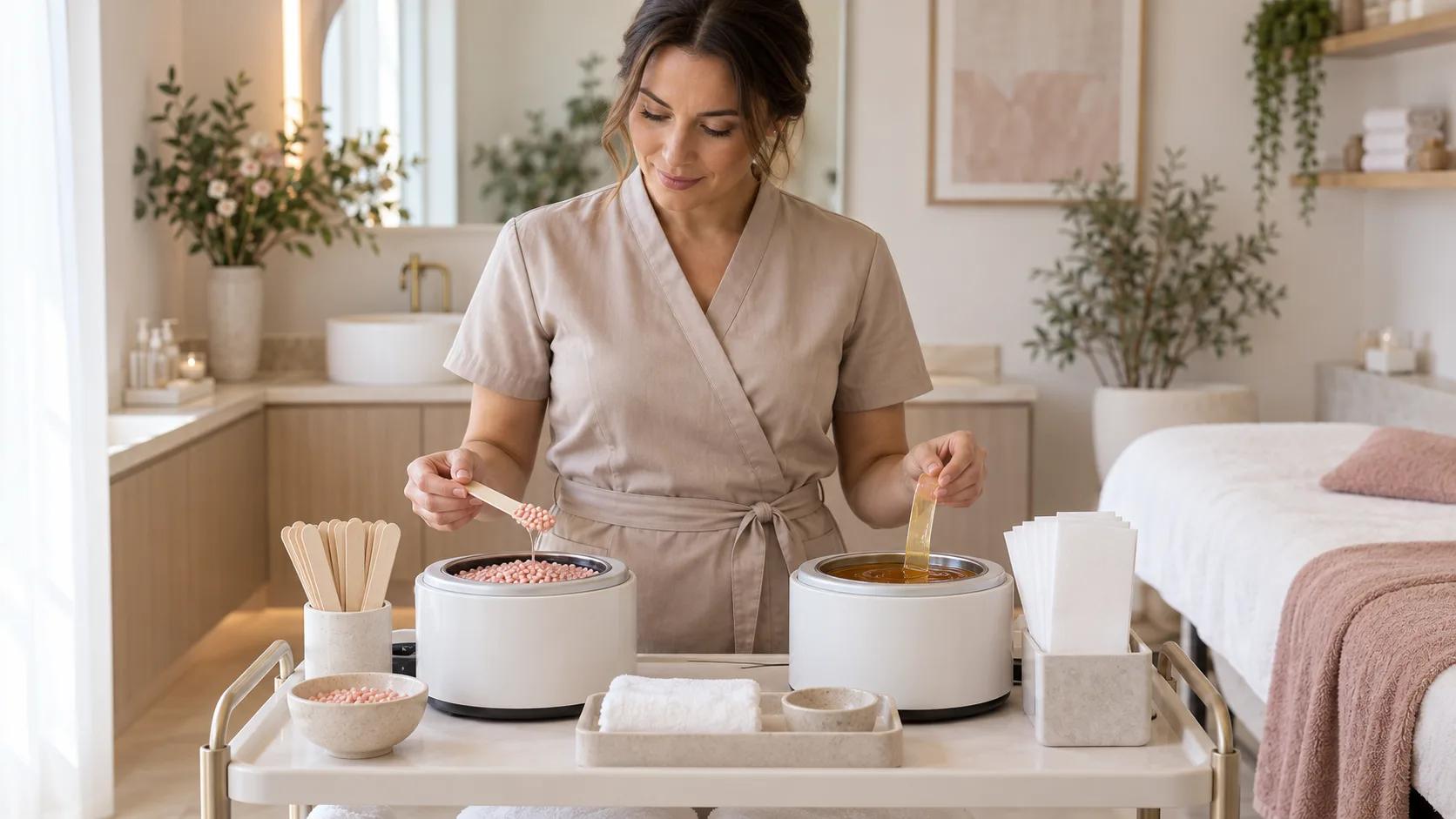
The short answer
Use hot wax when the approved service benefits from a stripless application that sets around the hair and can be removed by hand. Use strip wax when a thin application and strip-assisted removal suit the treatment area and your protocol. Neither method is universally better, gentler, faster or cheaper. Match the product to its stated treatment areas, the individual client, therapist competency, heater setup and measured cost per service. Many professional salons need both: a carefully chosen hot wax for defined work and a dependable strip wax for suitable larger areas.
Hot wax vs strip wax: what actually changes?
The clearest difference is the removal system. Professional hot wax—also described by some suppliers as hard, film or stripless wax—is warmed, placed with a spatula, allowed to set and normally removed without a separate paper or fabric strip. Strip wax is warmed, spread in a thin film and removed using a compatible waxing strip.
That distinction changes the whole service workflow. It affects application thickness, patch size, setting cues, heater management, disposable use and the therapist’s hand movements. It does not automatically tell you which product will suit a particular client. Two hot waxes may behave differently from each other, just as two strip waxes may require different working conditions.
Product language is not perfectly standardised. “Hot wax”, “hard wax”, “film wax” and “hybrid wax” can overlap in retail catalogues. Read the individual manufacturer’s directions rather than assuming the label defines the method. The same rule applies to strip wax: pot formats, cartridges, roller systems and alternative pastes should not be treated as interchangeable simply because they appear under one catalogue category.
A practical salon decision table
| Decision factor | Hot wax | Strip wax |
|---|---|---|
| Removal | Sets into a removable patch; normally no separate strip | Thin wax film is removed with a compatible strip |
| Application | Usually placed in controlled patches with a spatula | Usually spread thinly with a spatula or compatible roller system |
| Workflow cue | Therapist judges working consistency, thickness and set | Therapist judges working consistency, thinness and strip placement |
| Consumables | Fresh applicators plus preparation and aftercare items | Fresh applicators, waxing strips, preparation and aftercare items |
| Area choice | Use only for areas and services named in current directions | Use only for areas and services named in current directions |
| Economics | Measure wax used, discarded remainder, time and disposables | Measure wax used, strips, time, residue cleanup and wastage |
| Training focus | Patch control, edge formation, setting and hand removal | Thin application, strip adhesion, skin support and removal |
This table describes operational differences, not medical superiority. Avoid blanket claims that one method is safer, painless, suitable for everyone or incapable of causing a reaction. Suitability depends on consultation, skin and hair presentation, contraindications, product directions, temperature, technique and the therapist’s scope of practice.
Start with the service area, then check the directions
A professional salon should not create a universal body map from internet advice. Begin with the exact service and inspect the directions for products under consideration. Broad, relatively flat areas can support a different application pattern from small or contoured areas. Hair density, length and growth direction also affect practical control.
Strip wax is commonly considered for efficient thin application across suitable larger areas. Hot wax is commonly considered where a controlled stripless patch is useful. Those are starting points, not permissions. A product must explicitly support the intended use, and the therapist must still assess whether treatment should proceed for the individual client.
Define the choice in the salon protocol. Instead of “use whatever is free”, write the approved product, heater or insert, area, application method and substitute process. This reduces improvisation during busy periods and makes stock planning more accurate.
Heating and working consistency
Both systems require controlled heating. A dial number is not a universal wax temperature, and the same setting can produce different working behaviour across heaters, fill levels, room conditions and formulas. Follow the product and equipment directions, check the wax throughout the service and pause when consistency changes.
Hot wax must be workable enough to apply without excessive pressure while still forming a controlled patch that sets as directed. If it is too cool, it may become difficult to spread or form a reliable edge. If overheated, it can create an obvious client risk and may behave outside its intended working range.
Strip wax should normally be spread in a thin, controlled film. If it is too cool, the therapist may press harder or apply too thickly. If the film is excessive, consumable cost rises and removal may become less controlled. Correct the heating and technique rather than treating poor consistency as a reason to rush.
Application and removal workflow
A typical hot-wax sequence
- Complete consultation and inspect the intended area.
- Prepare the skin using the approved system.
- Bring the wax to the working consistency stated for that product.
- Test and monitor temperature according to training and workplace protocol.
- Use a fresh applicator and create a controlled patch at the trained thickness.
- Allow it to set using the product’s working cues.
- Support the skin and remove using the trained hand technique.
- Assess before any further application and complete aftercare.
A typical strip-wax sequence
- Complete consultation and inspect the intended area.
- Prepare the skin and set out compatible strips.
- Bring the wax to its correct working consistency.
- Use a fresh applicator or approved cartridge system to apply a thin film.
- Place and smooth the strip using the taught method.
- Support the skin and remove the strip with controlled technique.
- Check the area before deciding whether further work is appropriate.
- Manage residue and complete aftercare as directed.
The sequences look similar because consultation, preparation, skin support, observation and aftercare matter in both. The technical middle differs. That is why switching products without retraining creates risk: an experienced strip-wax therapist cannot assume the same patch thickness, timing or removal cues apply to a new hot wax.
Client comfort: use careful, honest language
Clients often ask which method hurts less or is better for sensitive skin. A responsible answer avoids certainty. Individual sensation varies, and salon technique, hair, treatment area, skin presentation, previous services and anxiety can influence the experience. A product claim should be repeated only when the current manufacturer evidence supports the exact wording.
A salon can make the appointment feel more considered without inventing outcomes. Explain the method, maintain privacy, communicate before removal, work within the client’s consent and stop when the treatment should not continue. A smooth, calm process helps clients feel cared for even when no universal comfort promise is possible.
Consultation, contraindications and patch testing
Use the same disciplined consultation standard for both systems. Review relevant client information, inspect the area and follow current patch-test and contraindication directions. Words such as natural, gentle, hypoallergenic or sensitive do not remove this obligation. Fragrance, colour and highlighted ingredients are not complete suitability assessments.
Record only the client information needed for the service and protect it appropriately. If the skin presentation, medication history or reported condition falls outside the therapist’s training or scope, defer and refer rather than diagnosing. Online product comparisons cannot replace qualified education or clinical advice.
Hygiene is a system decision
Both methods require a clean-to-used workstation flow. Keep unused applicators and strips away from the active treatment zone, position lined waste within reach and avoid touching clean stock with used gloves. Clean heater exteriors, handles, trolley surfaces and other contact points according to equipment and workplace instructions.
Never return a used applicator to the wax. Use a new disposable applicator for each contact in accordance with the salon’s infection-control process. A cartridge roller also needs a clear client-allocation, handling and disposal or cleaning protocol based on the manufacturer’s system; a cartridge does not make hygiene automatic.
Australian requirements can vary by state, territory and local business setting. Keep the salon’s procedures aligned with current jurisdictional guidance, workplace risk controls, manufacturer instructions and accredited training. Review the protocol whenever the wax, heater or service menu changes.
Which method is faster?
There is no defensible universal answer. Strip wax can support efficient thin coverage on appropriate larger areas, particularly when the therapist has a stable setup. Hot wax can be efficient for defined services when patch sizing, set time and removal are well controlled. An unfamiliar product makes either process slower.
Measure rather than guess. Record comparable service times without pressuring staff to sacrifice consultation, temperature checks, skin support or hygiene. Separate preparation, active application, removal, cleanup and rebooking time. A method that saves two minutes in application but adds residue cleanup or stock handling may not improve total room turnover.
Which method costs less per treatment?
Pack price alone cannot answer this. For hot wax, record the amount loaded, product applied, product discarded, applicators and other disposables. For strip wax, add strips and monitor film thickness, residue management and unused product. Include preparation, aftercare, gloves, cleaning materials and realistic wastage for both.
Divide total consumable cost by comparable completed services. Then consider labour and overheads separately when setting the menu price. Do not claim one system is cheaper because a tub costs less: pack size, application thickness, staff technique, service area and purchasing volume can reverse the apparent result.
Measure several ordinary appointments rather than one unusually easy service. Record the therapist and treatment type without retaining unnecessary client identifiers. The objective is a useful business comparison, not a clinical trial.
Current products Australian salons can investigate
The products below were present in the live National Salon Supplies catalogue on 11 September 2026. They are examples of the two categories, not rankings or claims of universal suitability. Prices and availability can change. Read the live product page and current manufacturer directions before purchasing or treating.
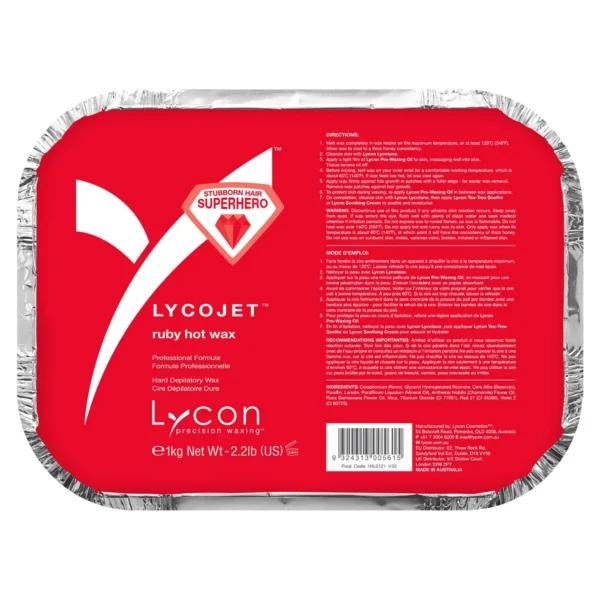
Hot wax
Lycon Lycojet Ruby Hot Wax 1kg
A current 1kg professional hot-wax option from Lycon.
Check current details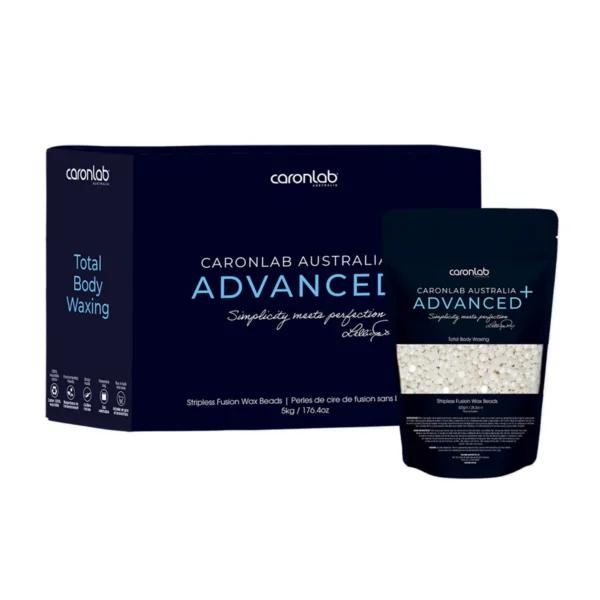
Hot wax
Caronlab Advanced+ Stripless Fusion Wax Beads
A current stripless bead-format option from Caronlab.
Check current details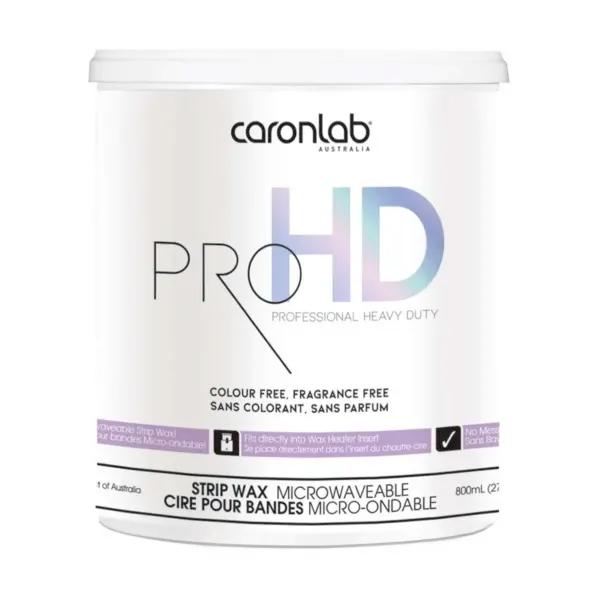
Strip wax
Caronlab Pro HD Strip Wax 800ml
A current professional strip wax supplied in an 800ml format.
Check current details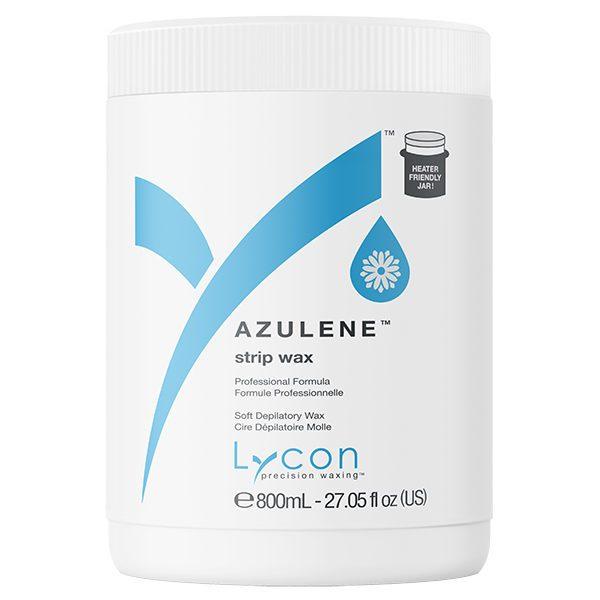
Strip wax
Lycon Azulene Strip Wax 800ml
A current 800ml strip-wax option from Lycon.
Check current detailsHow to run a fair salon comparison
Start with a defined question. “Which system should we use?” is too broad. Better questions include: which approved product gives our team the most repeatable workflow for a named service, or whether adding strip wax to an existing hot-wax menu reduces measured consumable cost for suitable larger-area appointments.
Compare each product under its own instructions. Do not use one brand’s heater setting, application thickness or timing for another. Give therapists supervised practice before recording results. Hold the service type, observation sheet and cost method as consistent as practical, while accepting that clients and hair presentations are never identical.
Track warm-up readiness, application control, removal integrity, residue, product used, disposables, cleanup, total room time and staff confidence. Client feedback can inform the experience but should not be turned into unsupported claims such as “painless” or “best for sensitive skin”.
Build a two-system salon protocol
If the salon keeps both systems, simplicity matters. Assign every approved wax a defined role. Name its heater or insert, storage position, intended services, application supplies and substitute. Display short operational cues near the workstation without replacing the full manufacturer directions.
Use colour coding only as an internal organisational aid, never as proof of product suitability. Train staff on both the shared steps—consultation, preparation, temperature control, hygiene and aftercare—and the method-specific steps. Record competency before allowing unsupervised use.
Keep enough stock to support average use and supplier lead times, but avoid filling shelves with overlapping formulas. A dependable core hot wax and core strip wax are easier to train, rotate and troubleshoot than multiple products with no distinct role. Add a specialist product only when a real service need justifies the extra complexity.
Hot wax and strip wax troubleshooting
| Observation | Check first | Avoid |
|---|---|---|
| Hot wax breaks during removal | Product-specific thickness, set cue, patch size and removal technique | Assuming every hot wax uses the same method |
| Hot wax is stringy or hard to place | Working consistency, heater stability and room conditions | Increasing heat blindly or pressing harder |
| Strip wax applies too thickly | Working consistency, applicator angle, pressure and loading | Compensating with repeated passes |
| Strip does not remove cleanly | Strip compatibility, film thickness, smoothing and removal technique | Repeatedly treating an area without reassessment |
| Results vary between therapists | Training, heater setup, quantities and written protocol | Buying another formula before observing the workflow |
| Unexpected skin response | Stop, follow the salon response process and document accurately | Continuing treatment or attempting a diagnosis |
Buying checklist
- Which exact services and treatment areas will the product support?
- Do the current directions name that intended use?
- Is the wax hot, hard, film, hybrid or strip wax—and what does the manufacturer mean?
- Which heater, insert, applicator or strip is demonstrably compatible?
- What patch-test, contraindication and warning information applies?
- What method-specific training does the team require?
- How will the salon prevent double dipping and cross-contamination?
- What is the measured product and disposable cost per treatment?
- How much product is discarded or lost to poor technique?
- Can the supplier replenish the product reliably?
- Does it have a distinct role or merely duplicate existing stock?
- What is the controlled substitute if it becomes unavailable?
Final recommendation
Do not force hot wax and strip wax into a single winner. They are different professional systems. Choose hot wax where the exact stripless product and your trained protocol suit the service. Choose strip wax where a thin, strip-assisted application is appropriate. Keep both when the menu genuinely needs both.
The strongest salon decision combines current directions, individual consultation, controlled heating, therapist competency, hygiene and measured commercial data. Start with one core option in each necessary category, document its role and review the system quarterly or whenever the product, instructions, equipment or service menu changes.

Current product information and purchases are provided by National Salon Supplies.
Frequently asked questions
What is the main difference between hot wax and strip wax?
Hot wax sets and is normally removed without a paper or fabric strip. Strip wax is applied as a thin film and removed with a suitable waxing strip. Exact methods vary, so follow the directions for the individual product.
Can an Australian salon use both hot wax and strip wax?
Yes. Many salons maintain both systems because treatment areas, hair characteristics, client factors and service protocols differ. The salon should define where each approved product belongs and train staff accordingly.
Is hot wax always better for sensitive skin?
No universal claim is appropriate. Product formulation, treatment area, consultation, temperature control, technique and the individual client all matter. Follow current manufacturer instructions and professional training.
Which wax is more economical for a salon?
Economy depends on measured product use, supporting consumables, wastage, treatment time and service mix. Compare cost per completed treatment rather than pack price alone.