Professional waxing guide · Australia
Wax Cartridges Explained: Choosing the Right Salon System
A practical, commercial guide to cartridge formats, roller widths, heaters, formulations, workflow, hygiene, technique and cost per service.
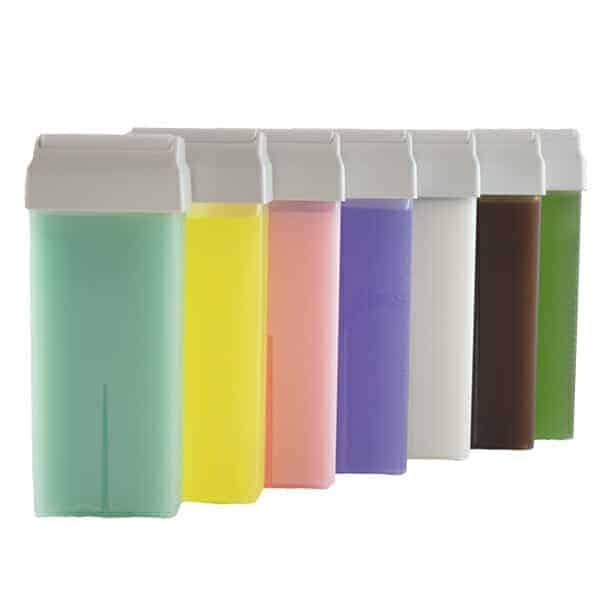
The short answer
Choose a wax cartridge system when you regularly perform larger-area strip-wax services and want a repeatable application width, tidy handling and a compact heater. Start with a compatible 100ml heater, a medium or large fixed roller for legs, arms, backs and chests, quality paper or non-woven strips, pre-wax cleanser and appropriate aftercare. Do not choose a cartridge solely by fragrance or price. Confirm heater fit, roller format, treatment area, manufacturer directions and cost per usable service first.

What is a wax cartridge system?
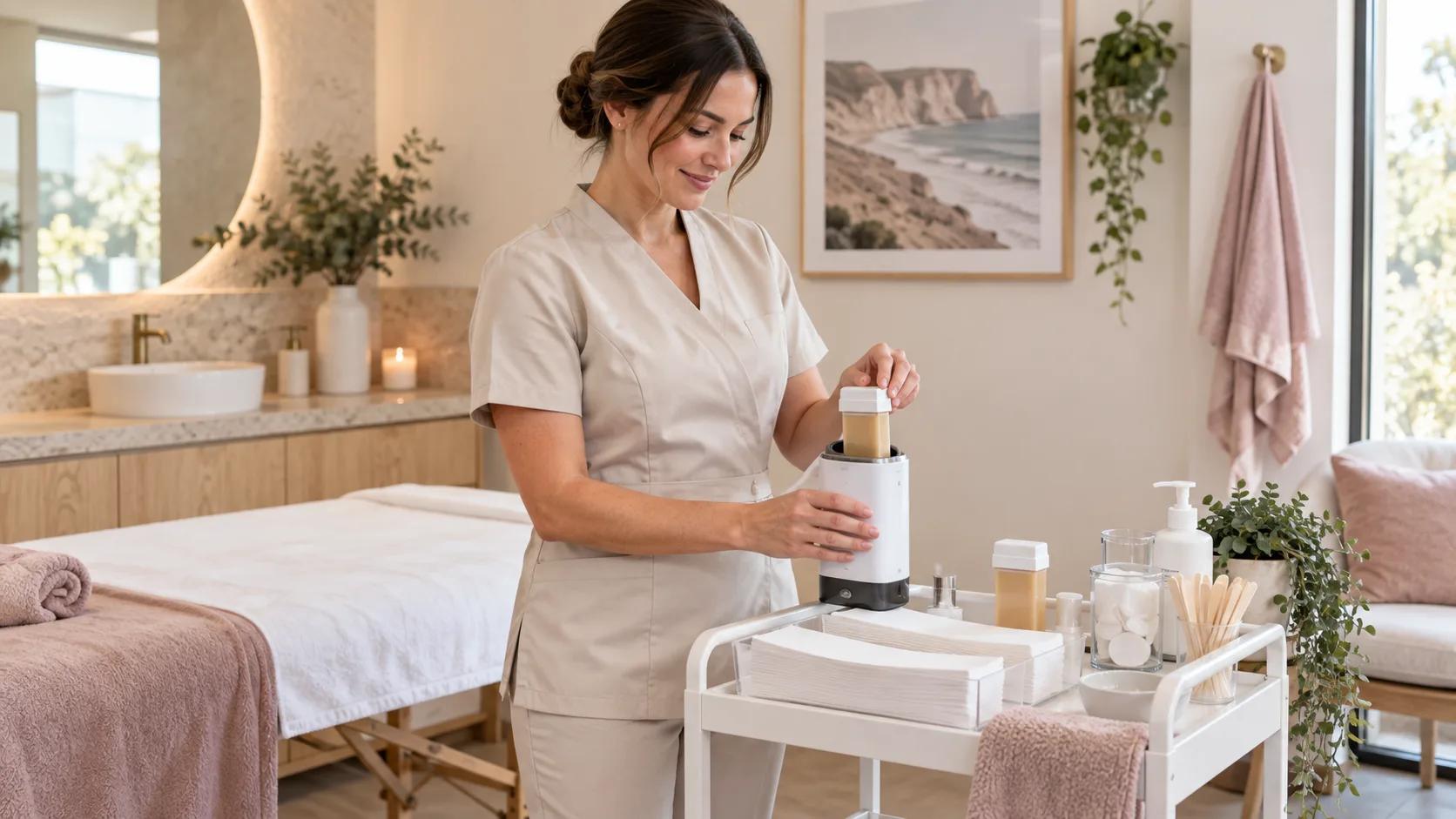
A wax cartridge is a sealed or semi-sealed container of strip wax fitted with, or designed to accept, a roller head. The cartridge sits inside a purpose-built heater. Once the wax reaches the working consistency specified by the manufacturer, the therapist rolls a thin, even layer onto the treatment area and removes it with a waxing strip.
The cartridge does not change the basic principle of strip waxing. It changes how the wax is heated, held and spread. Instead of repeatedly dipping a spatula into a pot, the therapist uses the roller to meter wax directly onto the skin. That can make application faster and more consistent across broad, relatively flat areas. It can also reduce drips around the workstation when the system is handled correctly.
Cartridge wax is not the same as hot or hard wax. Most cartridges contain strip wax and therefore require a paper or fabric strip for removal. They are generally intended for areas such as legs, arms, backs and chests. Smaller roller formats may be available for more precise work, but a salon should follow the exact product instructions and its own treatment protocols rather than assuming every cartridge suits every body area.
When cartridges make commercial sense
A cartridge system is most useful when a salon performs a steady volume of larger-area waxing. The roller lays down a predictable strip of wax and can reduce the repeated hand movements involved in pot-and-spatula application. That consistency is valuable when several therapists need to deliver a recognisable house standard.
It is not automatically the best choice for every business. A low-volume salon may find that a conventional pot provides more flexibility across services. A highly specialised waxing studio may use cartridges for legs and arms while retaining hot wax and traditional strip wax systems for other work. Mobile therapists must also consider transport, power access, warm-up time and how heated equipment will be secured between appointments.
A cartridge system is worth considering if:
- Leg, arm, back or chest waxing forms a meaningful part of the service menu.
- The team values a consistent application width and thin film.
- Bench space is limited but a dedicated cartridge heater can be accommodated safely.
- The salon can standardise compatible cartridges, roller heads and heaters.
- Staff are trained to test working temperature and follow the manufacturer’s directions.
Use another system when:
- The service specifically calls for hot or hard wax rather than strip wax.
- The treatment area is too contoured or confined for the selected roller width.
- The manufacturer does not recommend the product for the intended area or client.
- The heater and cartridge are not demonstrably compatible.
- Your hygiene protocol cannot support safe handling, cleaning and single-client allocation where required.
Fixed-head versus removable-head cartridges
A fixed-head cartridge arrives with its roller attached. This is convenient because there is no separate head to match, store or attach. It also gives the salon a predictable combination selected by the manufacturer. The trade-off is less flexibility: the supplied head determines the application width, and the entire cartridge must be managed according to that product’s directions.
A removable-head or no-head cartridge accepts a compatible roller head. This can give a salon more choice of widths and may suit operations that already use a particular heater-and-head ecosystem. Compatibility becomes more important, however. A head that appears to fit may still leak, roll poorly or apply an unsuitable amount. Confirm the cartridge neck, roller and heater requirements rather than mixing components by eye.
Do not interpret “removable” as permission to transfer a used roller between clients. Hygiene requirements depend on the system, manufacturer directions and workplace protocol. If a component cannot be cleaned or managed safely as directed, treat that as a system-selection problem—not something to improvise around during a busy shift.
Roller-head widths and treatment areas
Roller width controls the size and precision of the wax path. A broad roller can cover a leg efficiently but becomes awkward around knees, ankles and other contours. A narrow roller improves placement but requires more passes over a large area. The best width is therefore the one that matches the service, not simply the widest available option.
| Roller format | Typical use | What to check |
|---|---|---|
| Wide or large | Broad, relatively flat body areas such as legs, backs or chests | Can the therapist maintain skin support and a thin, controlled layer around contours? |
| Medium | Arms, lower legs and general body work | Does the width balance speed with accurate placement for your menu? |
| Narrow or precision | Smaller sections where the manufacturer permits cartridge use | Is the roller specifically compatible and is another wax method more appropriate? |
Never let roller width dictate unsafe technique. Work in manageable sections, support the skin, respect hair-growth direction and use the pressure and removal method specified by the brand. If the roller skips, drags or deposits an overly thick layer, stop and diagnose the temperature, roller movement and product compatibility instead of repeatedly rolling over the same skin.
Heater compatibility matters more than appearance
Many professional cartridges are described around a 100ml or 100gm format, but that label alone does not guarantee a correct fit. Cartridge dimensions, cap design, roller head and heater chamber can differ. The safest purchasing route is a documented compatible system or starter kit, followed by replacement cartridges that the supplier or manufacturer identifies as suitable.
A single handheld heater may suit an individual therapist or lower-volume service. Multi-cartridge heaters can help a busy room keep several products ready, but they cost more, occupy more bench space and require a clearer labelling and rotation system. Consider how many therapists work simultaneously, how many formulations are genuinely needed and whether holding multiple cartridges warm aligns with the product directions.
The heater’s job is to bring wax to a usable consistency and maintain it reliably. It is not a reason to guess a universal temperature. Formulations, ambient room conditions and heater designs vary. Follow the cartridge and heater instructions, allow proper warm-up, keep the unit upright and test the wax according to professional protocol before client application.
How to choose a cartridge formulation
Begin with the treatment area and hair characteristics, then check the manufacturer’s stated suitability. Consider glide, grip, working consistency and the salon’s existing pre- and post-wax system. Ingredients and fragrance may matter to client preference, but marketing language should never replace a proper consultation, contraindication check or patch-testing policy.
A useful salon range is usually smaller than a catalogue. One dependable general-purpose cartridge, supported by a clearly justified alternative, is easier to train, stock and reorder than a collection chosen mainly for colour or scent. Add another formulation only when it solves a recurring service need and the team understands when to choose it.
Rosin, synthetic-resin, oil-containing and fragranced products may have different handling characteristics and client considerations. Do not infer allergy suitability from words such as “gentle”, “natural” or “sensitive”. Read the current ingredient information and manufacturer warnings, conduct the consultation required by your professional practice, and refer uncertain clients appropriately.
A clean, efficient cartridge-waxing station
Set the station before the client enters. The aim is a one-way workflow from clean supplies to treatment and then to waste or the designated cleaning area. Keep the heater on a stable, heat-resistant surface where its cable cannot be pulled. Separate unused strips and consumables from items touched during treatment.
- Check the heater, cable, cartridge housing and roller for visible damage or contamination.
- Confirm the cartridge identity, batch information where retained, opening date and suitability for the booked service.
- Prepare cleanser, powder or oil where directed, strips, gloves, disposable items, aftercare and a lined waste container.
- Warm the cartridge upright for the manufacturer’s recommended period.
- Verify roller movement on an appropriate disposable strip and test working temperature according to protocol.
- Complete consultation and skin assessment before application.
- Prevent the cartridge exterior and heater from contacting contaminated surfaces during the service.
- After treatment, manage the cartridge, head, heater and waste exactly as required by the product instructions and salon infection-control procedure.
Waxing practices can involve skin contact and potential exposure to body substances. Your written process should be informed by applicable state or territory requirements, manufacturer instructions, workplace risk assessment and recognised infection-control principles. A blog article cannot determine the legal or clinical requirements of a particular business.
Application workflow: consistency before speed
Fast application is only useful when it remains controlled. Prepare the skin as directed and make sure it is dry enough for the selected system. Hold the heater or cartridge so the roller makes stable contact without excessive pressure. Roll in the direction of hair growth, creating a thin and even film sized for the strip and the therapist’s control.
Apply the strip with enough free edge for a secure grip. Smooth it as required, support the skin and remove using the trained technique, keeping the pull close and parallel rather than lifting away from the body. Work methodically and observe the skin throughout. Do not repeatedly wax an area because the first application was incomplete; follow the product protocol and your professional judgement.
New cartridges sometimes need a short priming roll on a disposable strip before wax flows evenly. If a warmed cartridge still does not roll, check whether the seal or cap has been removed as directed, whether the roller is seated correctly and whether the wax has reached the specified consistency. Never force, puncture or modify a cartridge.
Common cartridge problems and what they indicate
| Problem | Likely checks | Better response |
|---|---|---|
| Roller skips or drags | Warm-up, roller movement, angle, pressure and skin preparation | Stop, check the system and test on a disposable strip before continuing. |
| Wax applies too thickly | Working consistency, roller pressure and speed | Correct the cause; do not compensate by making longer treatment passes. |
| Wax leaks around the head | Head fit, cartridge damage, storage angle and brand compatibility | Remove the unit from service and follow supplier guidance. |
| Strip does not remove cleanly | Layer thickness, service timing, strip quality and removal technique | Return to the manufacturer protocol and retrain the workflow. |
| Cartridge moves inside heater | Incorrect format or heater mismatch | Use a verified compatible cartridge rather than packing or modifying the heater. |
| Inconsistent results between staff | Different warm-up times, product choice or technique | Document one protocol and observe competency before adding more products. |
Calculate cost per service—not price per cartridge
A cheap cartridge is not economical if it applies too heavily, leaks, requires extra passes or sits unused until it must be discarded. Record the number and type of services achieved from each cartridge under normal salon conditions. Add strips, pre-care, aftercare, disposable items, cleaning time and reasonable wastage to understand the real consumable cost.
Use a simple formula: total consumable cost for the service divided by completed services. For example, if a carton and its associated strips and consumables cost $240 and support 60 comparable services, the consumable component is $4 per service before labour, rent, payment costs and overheads. Use your own observed yield; theoretical coverage varies with treatment area, hair, therapist technique and product.
Track wastage separately. Leaks suggest compatibility, storage or handling issues. Excessively thick application suggests temperature or technique. Frequent stockouts suggest the reorder point is too low. This turns cartridge selection into an operational decision rather than a debate about which scent staff prefer.
Professional wax cartridge examples currently available
The following examples were confirmed in the National Salon Supplies cartridge category when this guide was reviewed. They illustrate different brands rather than a universal ranking. Availability, variants, pricing and product directions can change, so check the live product page before ordering.
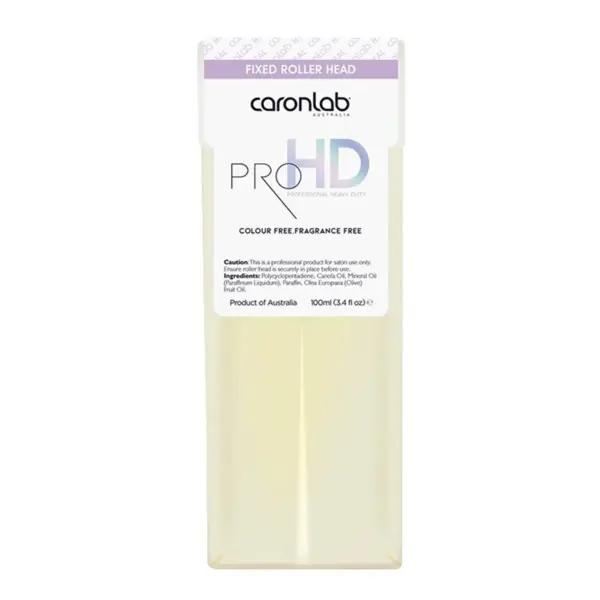
Caronlab Pro HD Strip Wax Cartridge 100ml
A fixed-head professional strip-wax cartridge from Caronlab.
Check current details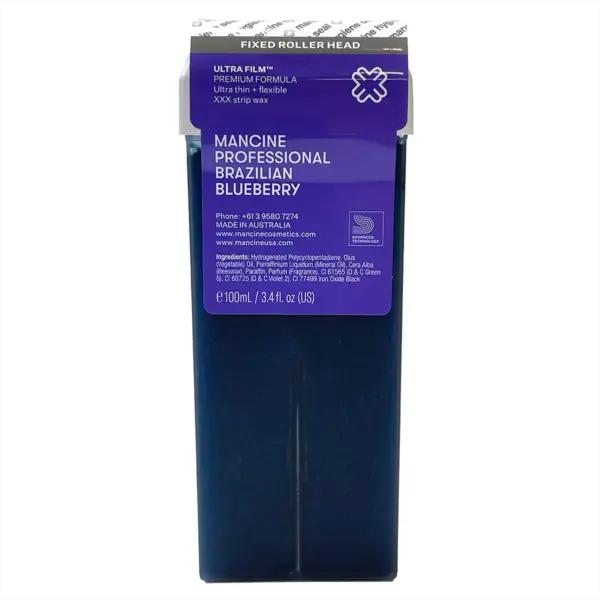
Mancine Brazilian Blueberry Wax Cartridge 100ml
A 100ml cartridge option from Mancine’s professional range.
Check current details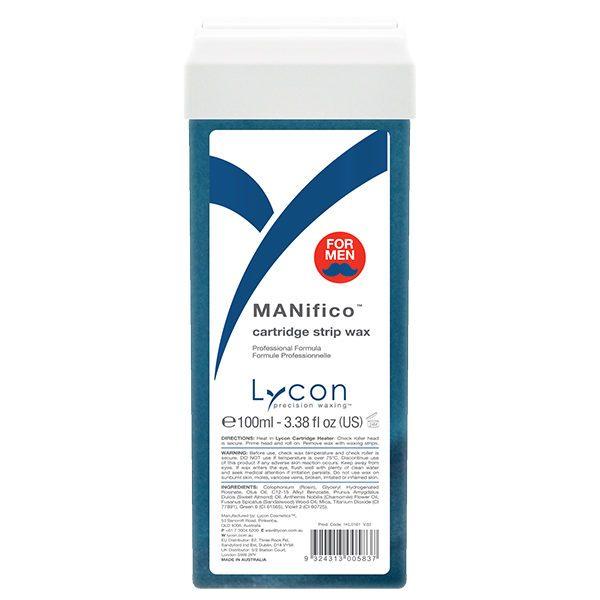
Lycon Manifico Wax Cartridge 100ml
A Lycon strip-wax cartridge listed for larger treatment areas.
Check current detailsWax cartridge buying checklist
Use this checklist with your therapist team before committing to a system. A good purchase should make service delivery clearer, not create a shelf of incompatible parts.
- Which services and body areas will use cartridges?
- Is strip wax appropriate for those services?
- Which cartridge size and roller width are required?
- Is compatibility with the selected heater documented?
- Is the head fixed, removable or supplied separately?
- What are the warm-up, working and storage instructions?
- What consultation, patch-test or contraindication instructions apply?
- How will cartridges be identified and managed during treatment?
- What is the observed yield and consumable cost per service?
- Can the supplier consistently provide cartridges, strips and replacement heaters?
- How will staff competency and treatment consistency be checked?
- What happens if the product is discontinued or temporarily unavailable?
For a first system, a brand-matched starter kit can reduce compatibility guesswork. For an established salon, audit the existing heater model and treatment mix before reordering. Avoid buying a large carton until the team has trialled the formulation appropriately and recorded its real-world yield.
Cartridges versus pot-and-spatula strip wax
Cartridges favour speed, portability and a consistent application width. A conventional pot offers more freedom to change spatula size and application shape. Neither is automatically more professional. Many salons use both: cartridges for efficient large-area work and pot systems where the therapist needs different placement or formulation options.
The deciding question is not “which method is better?” It is “which controlled process best suits this service, team and client?” Compare training time, workstation space, heating capacity, waste, consumable cost and the service result. Standardise the chosen process, then measure it rather than switching products after isolated difficult appointments.
How to introduce a cartridge system to your team
Treat a new cartridge system as a process change, not simply a new item in the cupboard. Nominate one experienced therapist to review the heater and cartridge instructions, build the workstation checklist and supervise the initial trial. Record the cartridge, head, heater, warm-up procedure and supporting products used. If staff are allowed to create their own combinations, it becomes almost impossible to work out whether a problem comes from the wax, the heater or the technique.
Run the first training session without appointment pressure. Staff should practise loading and removing the cartridge when cool, positioning the heater safely, reading any indicator or control, priming the roller onto a disposable strip and recognising the correct working flow. They should also know what an incorrectly seated, leaking or damaged cartridge looks like and when equipment must be taken out of service.
Next, document the treatment sequence in plain language. Include consultation, preparation, temperature testing, application direction, maximum working section, strip placement, skin support, removal, aftercare and the cleaning or disposal pathway. Attach the current manufacturer instructions or keep them immediately accessible. The salon checklist should support those instructions, not rewrite or contradict them.
Assess consistency across several supervised services. Look for a thin and even application, controlled strip size, good skin support, minimal contamination of the heater and accurate product recording. Speed should be measured only after the technique is dependable. A therapist who rushes the roller may create thick edges, missed patches and more clean-up, erasing the commercial benefit of the system.
Review the trial after an agreed number of comparable treatments. Ask whether the cartridge reduced setup or application time, whether the heater maintained a workable consistency, how much product was used and whether staff could follow the same process. Record client feedback carefully without turning individual comments into performance claims. If the system does not produce a clear operational advantage, investigate the cause before ordering more stock.
Stock control, storage and reorder planning
Cartridges are compact, but a shelf full of similar-looking variants can still create waste. Give each approved formulation a defined role in the service menu and store it according to the manufacturer’s conditions. Use first-expiring, first-out rotation where expiry information applies. Keep cartons, batch details and opening records in the format required by your salon procedure.
Set a reorder point using actual weekly consumption and supplier lead time. If the salon uses six cartridges per week and wants two weeks of operating cover, it needs more than a last-cartridge reminder. Allow for delivery timing, seasonal demand and the risk of a key service being unavailable. At the same time, avoid buying so deeply that products age before use or the team becomes locked into a formulation that no longer suits the menu.
When a preferred cartridge is unavailable, do not silently substitute another product during treatment. Check compatibility, directions and client considerations, update the workstation label and brief the team. A controlled substitute is a new product decision; it deserves the same checks as the original purchase.
Reducing unnecessary waste
The best waste reduction comes from correct selection and controlled technique. A compatible roller that applies a thin, usable film is more meaningful than vague “eco” language. Measure discarded product, damaged cartridges, unused variants and excess strips. Those figures show where purchasing or training changes can make a real difference.
Do not make environmental disposal claims without evidence from the manufacturer or local waste service. A plastic cartridge contaminated with residual wax may not belong in ordinary kerbside recycling even if the base material has a recycling symbol. Follow local requirements and supplier information. Where two systems perform equally well, packaging, carton quantities, replacement-part availability and expected equipment life can form part of the purchasing decision.
Final recommendation
For most salons exploring cartridge waxing, begin narrowly: one verified heater, one compatible general-purpose 100ml cartridge, the correct strips and a written service protocol. Trial it on the large-area services it is designed for. Measure warm-up time, usable yield, service time, wastage and therapist feedback across a meaningful sample before expanding the range.
A cartridge system earns its place when it improves consistency and workflow without compromising consultation, skin assessment, hygiene or technique. The best system is not necessarily the most expensive or the one with the widest choice of fragrances. It is the system your team can use correctly, repeatedly and economically while following the current manufacturer instructions.
Purchases are completed securely on National Salon Supplies.
Frequently asked questions
Do all 100ml cartridges fit every heater?
No. Similar capacity does not guarantee identical dimensions, head design or heater compatibility. Confirm the specific heater and cartridge combination with the manufacturer or supplier.
Do wax cartridges need strips?
Most professional roll-on cartridges contain strip wax and require a suitable waxing strip. Always check the individual product directions.
Which roller width should a salon choose?
Choose according to the treatment area and product instructions. Broad rollers suit large, relatively flat areas; narrower rollers provide more placement control.
Can a cartridge be reheated?
Follow the cartridge manufacturer’s storage, reheating and disposal directions. Label and manage opened stock under your salon protocol rather than relying on a general rule.
Are cartridges more hygienic than wax pots?
A cartridge can reduce open-pot handling, but the system is only as hygienic as its client allocation, handling, cleaning and disposal process. Follow applicable infection-control requirements.
How many treatments come from one cartridge?
There is no reliable universal number. Yield changes with treatment area, application thickness, hair, technique and wastage. Measure actual salon usage to calculate cost per service.