Professional brow tint comparison · Australia
Cream vs Liquid Brow Tint Developer: Professional Salon Guide
Compare the formats by compatibility, dispensing, mixing, station control, training, hygiene and real service cost—without treating developer texture as a promise about results.
The quick answer
Cream and liquid tint developers are formats within a professional colour system—not universal substitutes and not competing claims about which produces a “better” brow. Cream can support a controlled, cohesive mixing feel; liquid can support precise drop-based dispensing where the manufacturer directs it. Choose the exact developer supported by the tint brand, then compare measuring, station control, staff repeatability, cleaning, stock rotation and cost per completed service.
Cream tint vs liquid tint: clarify the comparison first
Salon teams often say “cream tint versus liquid tint” when they are really comparing cream developer with liquid developer. The colour itself may still come from the same professional tint range. Developer activates that colour according to a specific system. Confusing the developer format with the tint can lead to the wrong purchase, inaccurate staff language and unsafe assumptions about compatibility.
This guide compares the operational differences between cream and liquid oxidant using two products that were live in the National Salon Supplies catalogue on 5 October 2026: Refectocil Cream Oxidant 3% 100ml and Refectocil Liquid Oxidant 3% 100ml. Both parent listings identify them as developers for RefectoCil tints. That does not make every cream or liquid developer equivalent, nor does it authorise mixing these examples with another brand.
The decision is therefore not “which texture is universally best?” It is “which supported format gives this trained team the most controlled, repeatable workflow for the exact colour system?”
Side-by-side salon decision table
| Factor | Cream developer | Liquid developer |
|---|---|---|
| Physical format | Viscous cream dispensed by the supported method | Flowing liquid commonly dispensed as directed drops |
| First buying check | Exact tint compatibility and current ratio | Exact tint compatibility and current ratio |
| Station risk | Residue around opening or inconsistent amount if dispensed carelessly | Miscounted drops, splash or bottle-angle variation if handled carelessly |
| Mixing focus | Even incorporation without guessing quantity | Controlled dispensing and even incorporation without excess liquid |
| Training focus | Consistent unit of cream and clean dispensing | Consistent drop count and bottle handling |
| Best for | A salon whose supported system and team process suit the cream format | A salon whose supported system and team process suit the liquid format |
The table describes workflow, not a treatment prescription. Ratios, processing, patch testing and suitability must come from current instructions and accredited professional education for the exact products.
1. Compatibility comes before consistency
Texture is the visible difference, but compatibility is the decisive one. Confirm that the chosen developer is named or otherwise supported for the tint range. Check the current product page, packaging, manufacturer directions and training resources. A bottle marked 3% is not automatically compatible with every 3% colour system.
Formulations can differ beyond the headline concentration. A salon should not reverse-engineer chemistry from the front label or assume a hair-colour oxidant belongs near a lash-and-brow station. Store the tint and its supported developer together, while keeping visually similar products from other services clearly separated.
If both cream and liquid formats are supported, document which one the salon has adopted. If the team uses both, record the exact format in every formula record; “developer” alone is not enough to reproduce the service.
2. Cream developer: what changes at the station?
A cream format stays where it is placed more readily than a free-flowing liquid. In practice, that can make the quantity easier to see in a dish and may suit a therapist who values a cohesive mixing feel. The live RefectoCil Cream Oxidant listing describes a smooth, creamy texture designed to blend with the brand’s tint colours.
That convenience does not remove the need to measure. “A blob” is not a reproducible unit. Staff need the dispensing method and ratio in the current directions, plus a shared understanding of what the instructed amount looks like. Product left around a nozzle or opening can also distort later dispensing and create untidy handling, so close and clean the container as directed.
Cream is not automatically stronger, gentler, safer, faster or longer lasting. Those outcomes cannot be inferred from viscosity. Avoid turning a workflow preference into an unsupported client claim.
3. Liquid developer: what changes at the station?
A liquid format flows and is often counted in drops when the manufacturer instructs that method. This can create a clear routine: orient the bottle correctly, count carefully into a stable dish and confirm the total before mixing. The live RefectoCil Liquid Oxidant listing identifies it as a stabilised 3% liquid developer designed for RefectoCil lash and eyebrow tints.
Drop counting is only precise when the dispenser is working properly and the therapist pays attention. Bottle angle, squeeze pressure, blocked openings, partial drops and rushing can introduce variation. Staff should never compensate for a missed count by guessing. If interrupted, follow the salon’s documented response rather than continuing from an uncertain number.
A flowing liquid also needs a stable dish and deliberate trolley placement. Keep it away from edges, electrical equipment and absorbent paperwork. Replace the cap promptly and deal with spills under the product and workplace procedure.
4. Mixing behaviour and visual checks
Whichever format is selected, the mixture should be prepared exactly as the system directs. Use the supported quantities, a suitable mixing dish and an appropriate tool. Mix until the brand’s instructed condition is reached; do not invent extra developer to make application feel easier or add more tint to correct an uncertain ratio.
A cream developer may begin closer to the texture the therapist expects for controlled placement. A liquid developer may change the mixture’s flow more noticeably as it is incorporated. Those practical observations can help a salon compare workflow, but they do not replace the official ratio or prove one will create a superior result.
Use good neutral task lighting so staff can see the dish and application area clearly. Discard a mixture when its identity or ratio is uncertain. The small material cost of restarting is preferable to proceeding with an undocumented formula.
5. Precision application depends on more than developer
Developer format is one variable in a chain that includes preparation, mixing, brush condition, product load, mapping, therapist control and current processing directions. A salon should not expect a cream developer to fix a damaged brush or a liquid developer to compensate for poor measuring.
Choose an applicator that belongs in the trained method and supports controlled placement. The Refectocil Tint Brushes Soft 5pk is a current parent-catalogue example with synthetic bristles described for precise lash and brow tint application. Inspect reusable brushes before every service, clean them under the salon process and replace them when their edge or bristles no longer support accuracy.
Keep clean tools protected until use. Separate used items immediately so staff do not return them to the clean zone. Single-use applicators should not migrate back into stock once they have entered the active treatment area.
6. Consultation and client records do not change
Choosing cream or liquid developer does not reduce consultation, contraindication, consent, patch-testing or recordkeeping responsibilities. Follow the exact system’s current requirements and the salon’s reviewed professional procedures. A client’s previous tolerance does not justify ignoring current directions.
Record the tint brand and shade, developer brand and format, supported ratio, timing and other details required by the salon protocol. When a salon changes from liquid to cream, update the record template so the new information is explicit rather than buried in notes.
Client-facing language should remain factual. Explain that the salon uses a professional colour system selected for a controlled workflow. Do not claim the cream version is inherently gentler or that the liquid version lasts longer unless the exact manufacturer material supports that comparison.
7. Station setup for cream and liquid formats
Build the tint station in service order: verified client record, supported colour and developer, stable dish, measuring and mixing tools, application tools, timing control, approved preparation and removal items, clean consumables, waste and the products needed for reset. Keep clean stock protected from the active work area.
For cream, make the dispensing point visible and easy to wipe under the product directions. For liquid, create a flat, uncrowded area where drops can be counted without reaching across the client or other open products. A tray lip may help contain an accidental spill, but it does not replace careful handling.
Never decant developer into an unlabelled bottle to make the station look uniform. Original identification, directions, batch information and opening controls are more important than matching décor.
8. Staff training and calibration
Train every therapist on the exact format the salon stocks. A short calibration session should cover product identification, compatibility, locating current directions, dispensing, mixing, timing, records, cleanup, storage and the response to an uncertain measurement or spill.
Ask team members to demonstrate the process rather than only describe it. Observe whether cream quantities vary significantly between staff or whether liquid drops are counted consistently. Correct the method before measuring speed. A rushed but inconsistent service is not efficient.
Place a concise station checklist near the trolley. It can prompt product and opening-date checks, client record confirmation, exact developer identification, timer use and documentation. It must point back to—not rewrite—the current manufacturer directions.
9. Hygiene, storage and opening controls
Close developer containers promptly and store them under current label directions. Record opening dates where required and rotate stock appropriately. Protect bottles from contamination, heat, light or other conditions identified by the manufacturer. Do not keep mystery bottles, transferred liquid or products with unreadable labels.
Clean the mixing dish and reusable tools using a reviewed process suitable for their material and intended use. Inspect dishes for cracks, residue or damage. A permanently stained dish can make it harder to assess whether it is clean, even when staining alone does not prove contamination.
Maintain separate clean and used zones. Dispose of single-use items appropriately and clean contact surfaces between clients. Developer choice is not an infection-control strategy; the whole workflow matters.
10. Cost per service: measure the full system
Do not compare 100ml bottles on purchase price alone. Measure ordinary product use under the correct protocol, then include tint, developer, preparation, disposables, brushes or tool allocation, cleaning materials, consultation, application, processing, removal, records and realistic wastage.
A liquid format may appear easy to count, while a cream format may appear easy to control, but either can become costly when staff over-dispense or remake uncertain mixtures. Track actual usage over enough services to smooth out training variation. Never reduce quantities below the supported ratio merely to improve margin.
Review treatment contribution per booked hour as well as material cost. A repeatable setup and complete record can be more commercially valuable than a small bottle-price difference.
11. Stocking one format or both
Stocking both formats adds a second active developer, another opening date, another reorder point and another opportunity for selection error. Keep both only when the manufacturer supports them and the salon has a clear reason—such as distinct trained workflows—not because two options look comprehensive on a shelf.
If one format covers the service reliably, a single developer can simplify training and stock control. Set a reorder point from average use, lead time, forward bookings and a modest operational buffer. Count complete service capacity across tint, developer and essential consumables rather than ordering each item independently.
12. How to run a controlled comparison
Begin with documentation. Confirm that both formats are supported for the exact tint system and complete any required education. Nominate a trained lead therapist, define the comparison questions and keep all other controllable parts of the salon process stable.
Assess measurable workflow factors: ease of accurate dispensing, mixture repeatability, station cleanliness, product use per service, time needed for setup and cleanup, staff confidence with the written process, and the quality of completed records. Do not vary ratios or processing to create a dramatic “test”, and do not turn clients into an informal experiment.
Review the evidence after a meaningful number of ordinary, correctly conducted services. Choose the format that the team can use most consistently within the supported system. Document the decision, update stock and training, and retire ambiguous instructions.
13. Troubleshoot the workflow without changing the chemistry
When a tint mix feels different from the team’s expectation, pause before “fixing” it with extra colour or developer. First confirm the exact tint, exact developer, current directions, opening details, measured quantities and the tool used. Check whether the dispenser produced a complete amount, whether the dish contained residue and whether the therapist was interrupted. A process problem should not be answered with an improvised ratio.
| Observed issue | Process checks | Responsible response |
|---|---|---|
| Cream amount varies between therapists | Dispensing method, opening cleanliness, shared visual reference and current directions | Recalibrate measuring; do not average the guesses |
| Liquid drop count is uncertain | Dispenser, bottle position, interruptions and whether every drop was complete | Restart according to salon procedure rather than estimate |
| Mixture seems unfamiliar | Correct tint and developer, ratio, expiry/opening control, dish and mixing method | Stop and verify; never add product by feel |
| Application feels less controlled | Brush condition, product load, preparation, lighting and trained placement method | Correct the workflow before blaming the format |
| Developer is running out early | Measured use, spills, remakes, staff variation and service count | Audit usage and reorder data; preserve the instructed ratio |
If packaging, texture, odour or performance appears unexpectedly different, quarantine the product under the salon process and contact the supplier or manufacturer with the identifying information. Do not diagnose a formulation problem from appearance alone, and do not continue simply because an appointment is waiting.
14. Move from trial to a salon-wide standard
A successful trial is not complete until the whole service system has been updated. Set a rollout date, confirm enough compatible colour and developer stock, brief every therapist and reception team member, and remove obsolete quick-reference notes. Update consultation records, formula fields, trolley labels, opening-date controls, reorder sheets, service costing and staff competency records.
Decide how remaining stock from the previous format will be handled within current directions. Avoid leaving two open bottles at the station without a clear purpose. If both remain active, label their supported use and make the selection step explicit in the formula record. Never combine remnants or transfer them to a shared container.
Observe the first week of normal services. Check that records name the developer format, staff can locate current instructions, dishes are prepared consistently and opening dates are visible. Review material use against expected service count. Small drift is easier to correct early than after an undocumented habit becomes the salon norm.
15. Review aftercare and marketing language
A switch from cream to liquid developer—or the reverse—does not justify rewriting client promises unless supported information for the complete system has changed. Keep aftercare aligned with the tint manufacturer and professional training. Avoid adding claims about durability, sensitivity, “clean” ingredients or a stronger skin stain merely because the mixture feels different to the therapist.
Website and menu copy should sell the value clients can understand: professional consultation, thoughtful colour selection, controlled application and clear aftercare. The developer is an important backbar decision, but it is not usually the consumer-facing benefit. Accurate language builds trust and reduces the pressure on staff to defend an exaggerated technical claim during consultation.
Salon rollout checklist
- Exact tint and developer compatibility reconfirmed
- Current product directions accessible to the team
- Required professional education completed
- Dispensing and mixing method demonstrated consistently
- Stable dish, suitable brush and clean-to-used workflow prepared
- Consultation and formula records updated with developer format
- Opening-date, storage and stock-rotation controls in place
- Reorder point based on complete service capacity
- Service cost reviewed with measured product use and labour
- Client language and aftercare checked for unsupported claims
- Old instructions removed and legacy stock clearly controlled
- Post-launch record and usage audit scheduled
A practical decision framework
- Verify the tint system. Identify the exact colour range and its currently supported developer options.
- Read current directions. Confirm concentration, ratio, measuring method, processing, patch testing, storage and opening controls.
- Map the station. Decide how each bottle, dish, tool and clean consumable will be handled.
- Train and observe. Check whether every therapist can dispense, mix and document consistently.
- Measure commercial fit. Calculate real use, waste, labour and complete service cost.
- Choose and standardise. Stock the format with the strongest supported salon workflow, not the most persuasive texture story.
Current products to compare
These live catalogue examples belong to the RefectoCil ecosystem; inclusion is not a ranking or a claim that every item is required. Confirm current directions and availability.
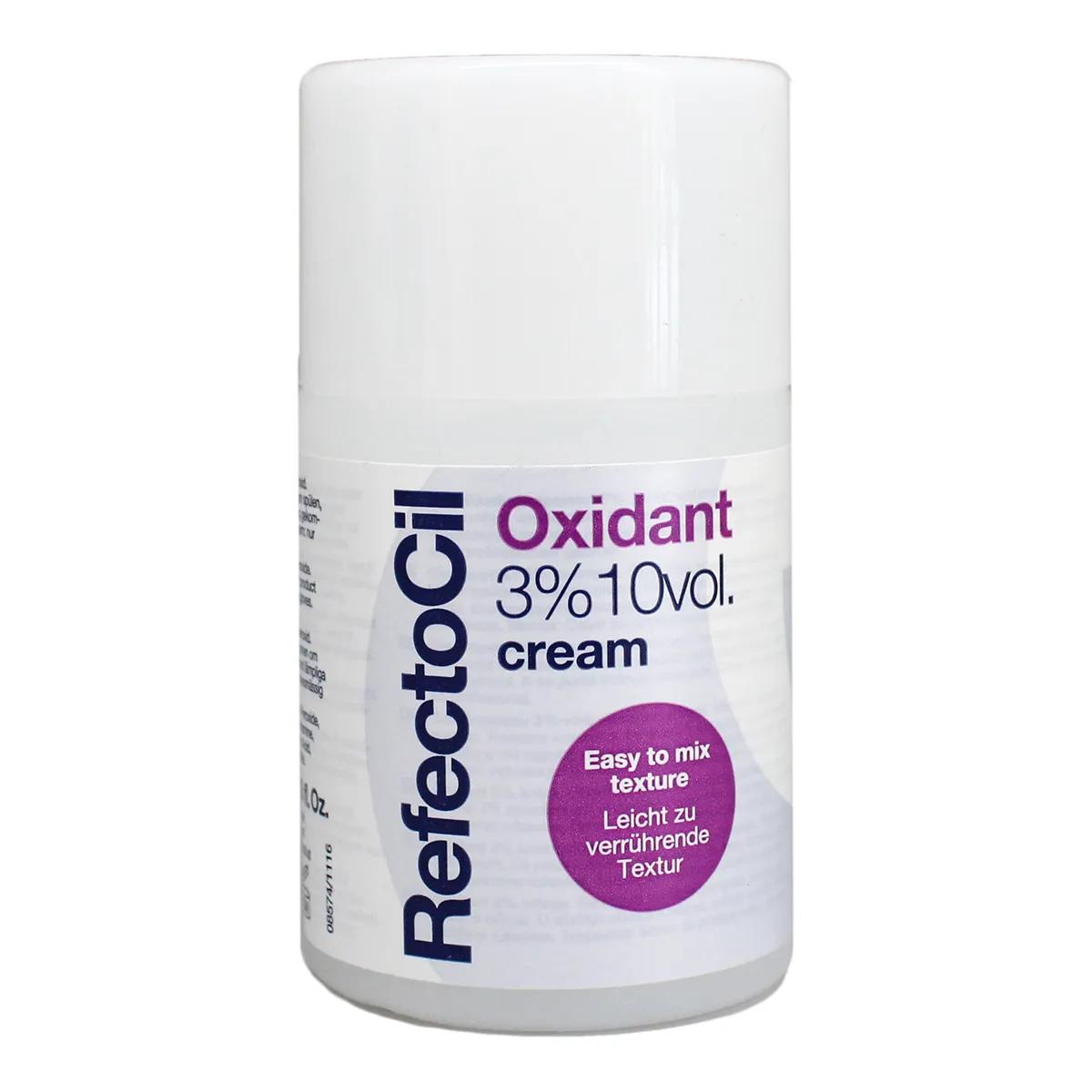
Cream developer
Refectocil Cream Oxidant 3% 100ml
The live parent catalogue identifies this as the stabilised cream developer made for RefectoCil tint colours.
Check current details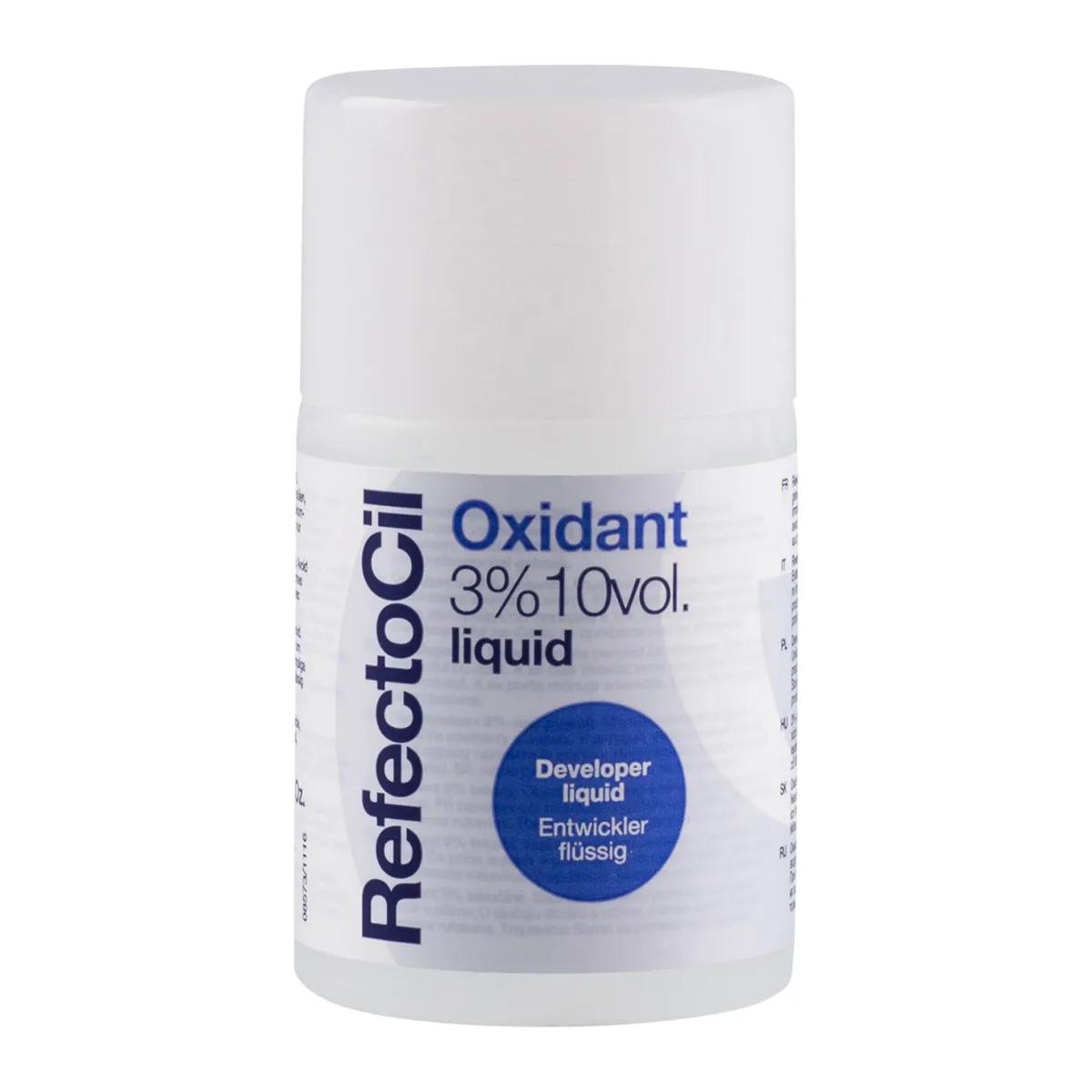
Liquid developer
Refectocil Liquid Oxidant 3% 100ml
The live parent catalogue identifies this as the 3% liquid developer designed for RefectoCil lash and brow tints.
Check current details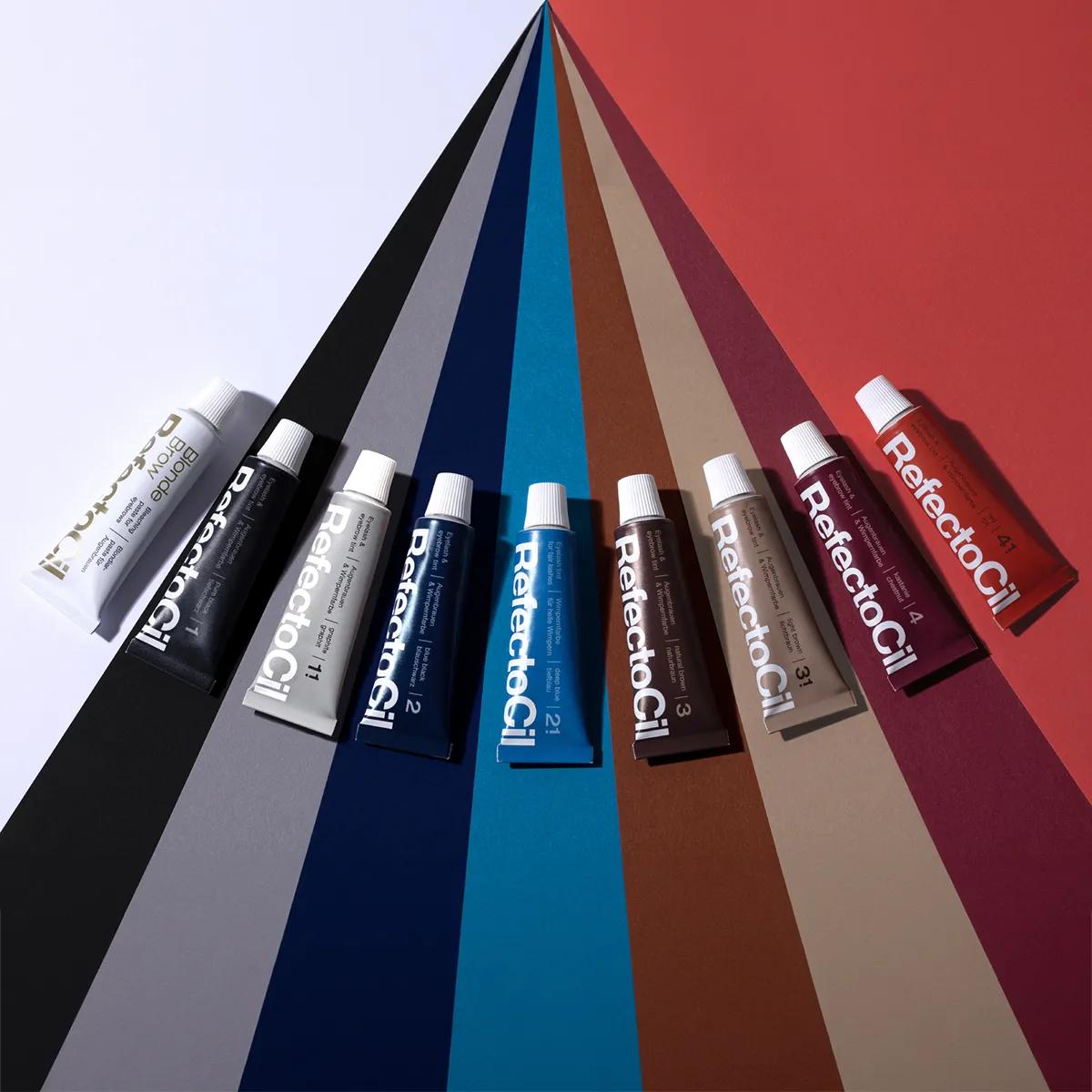
Compatible colour range
Refectocil Lash & Brow Tint 15ml
Check the current shade variants and directions on the live product page before ordering or use.
Check current details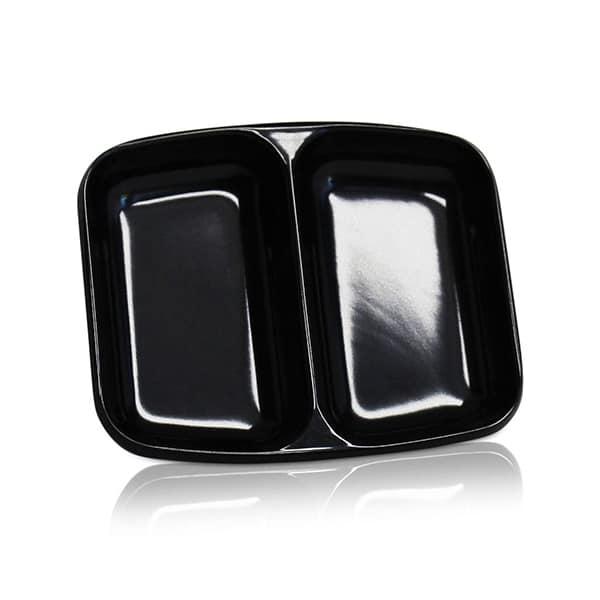
Mixing accessory
Refectocil Lash & Brow Tint Mixing Dish
A current reusable mixing accessory for a controlled, visible mixing workflow.
Check current details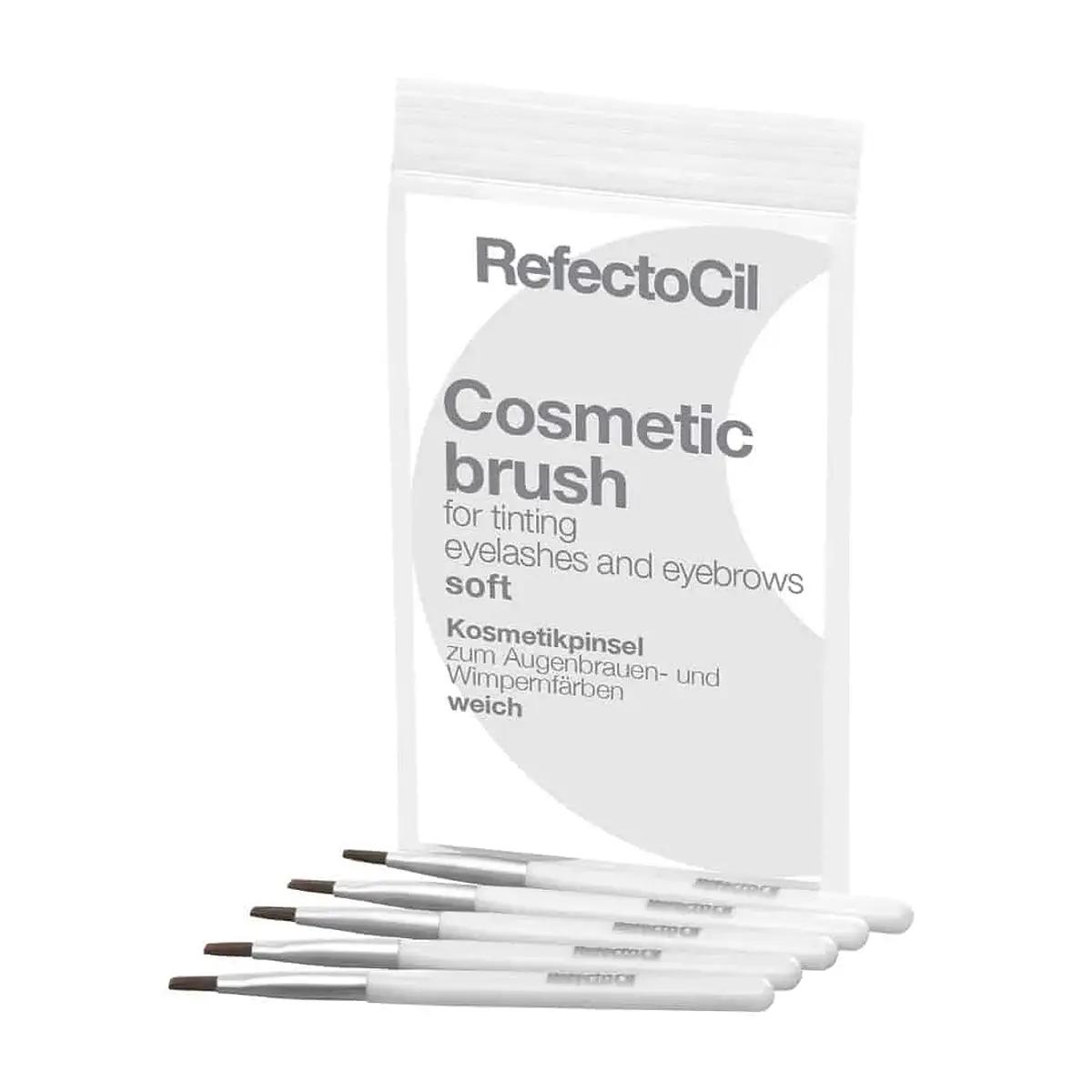
Application accessory
Refectocil Tint Brushes Soft 5pk
A current synthetic-bristle application brush listed for lash and brow tint work.
Check current details
Final recommendation
Choose cream or liquid developer only after confirming that the exact tint system supports it. Cream can offer a cohesive dispensing and mixing workflow; liquid can offer a clear drop-counting workflow. Neither format is universally stronger, safer or better. The best salon choice is the one your trained team can measure, mix, apply, record, store and reorder consistently under current directions.
Compare current professional tint developers
Check the live National Salon Supplies range before building or changing your system.
Browse tint developersFrequently asked questions
Is cream developer stronger than liquid developer?
Do not infer strength from texture. Compare the exact concentration and current manufacturer directions. The two RefectoCil examples in this guide are both listed as 3% oxidants, but format does not make unrelated products interchangeable.
Can a salon use cream and liquid developer with the same brow tint?
Only when the tint manufacturer currently supports both exact developers for that colour system. Confirm the tint, developer, ratio and method together; never substitute by appearance or concentration alone.
Which developer format is easier to measure?
That depends on the dispensing directions, container, staff technique and salon controls. A cream and a drop-dispensed liquid create different workflows. The best choice is the supported format the whole team can measure and document consistently.
Can developer from one brand be used with another brand’s tint?
Do not assume it can. Matching concentration does not establish formulation compatibility. Use only combinations supported by current manufacturer instructions and professional education.
Should a salon stock both cream and liquid oxidant?
Only if both have a defined, supported role and the salon can prevent mix-ups. One well-controlled format is usually simpler than duplicate stock bought without a clear operational need.