Professional lash lift comparison · Australia
Lash Lift Shields vs Rods: Professional Salon Guide
A practical way to compare profile, size, fit, styling intent, training and stock—without pretending one form is right for every client or system.
The short answer
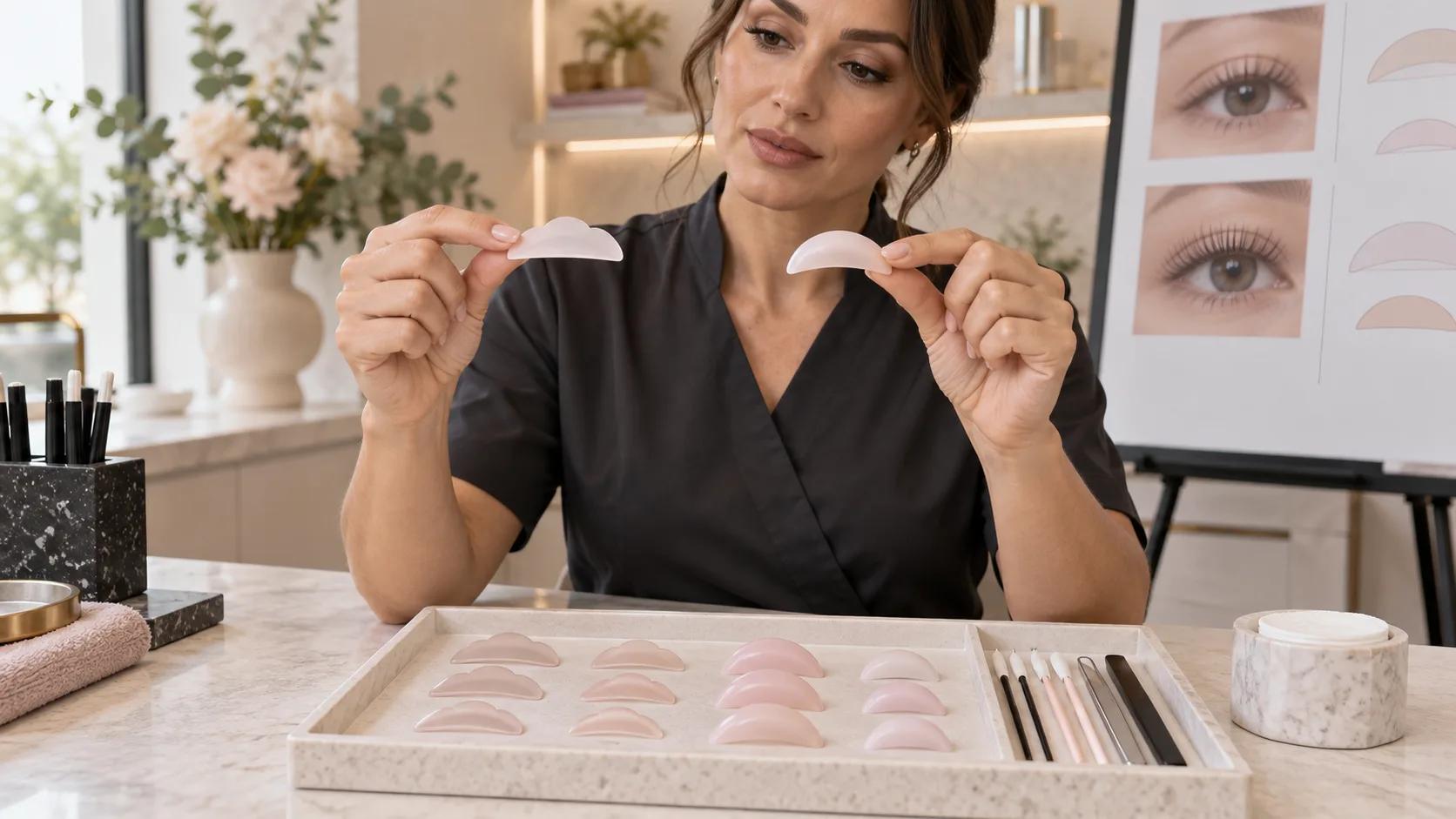
Lash-lift shields and rods are styling forms with different profiles, but the terms are not perfectly standardised across brands. A flatter or more angled shield may support a different visual direction from a rounded rod, while hybrid designs sit between simple labels. Do not select from “dramatic” versus “natural” marketing alone. Compare the exact family, sizes, eyelid fit, natural lash presentation, intended result, product directions and the method taught for your professional system.
Lash lift shields vs rods: why the name is only the beginning
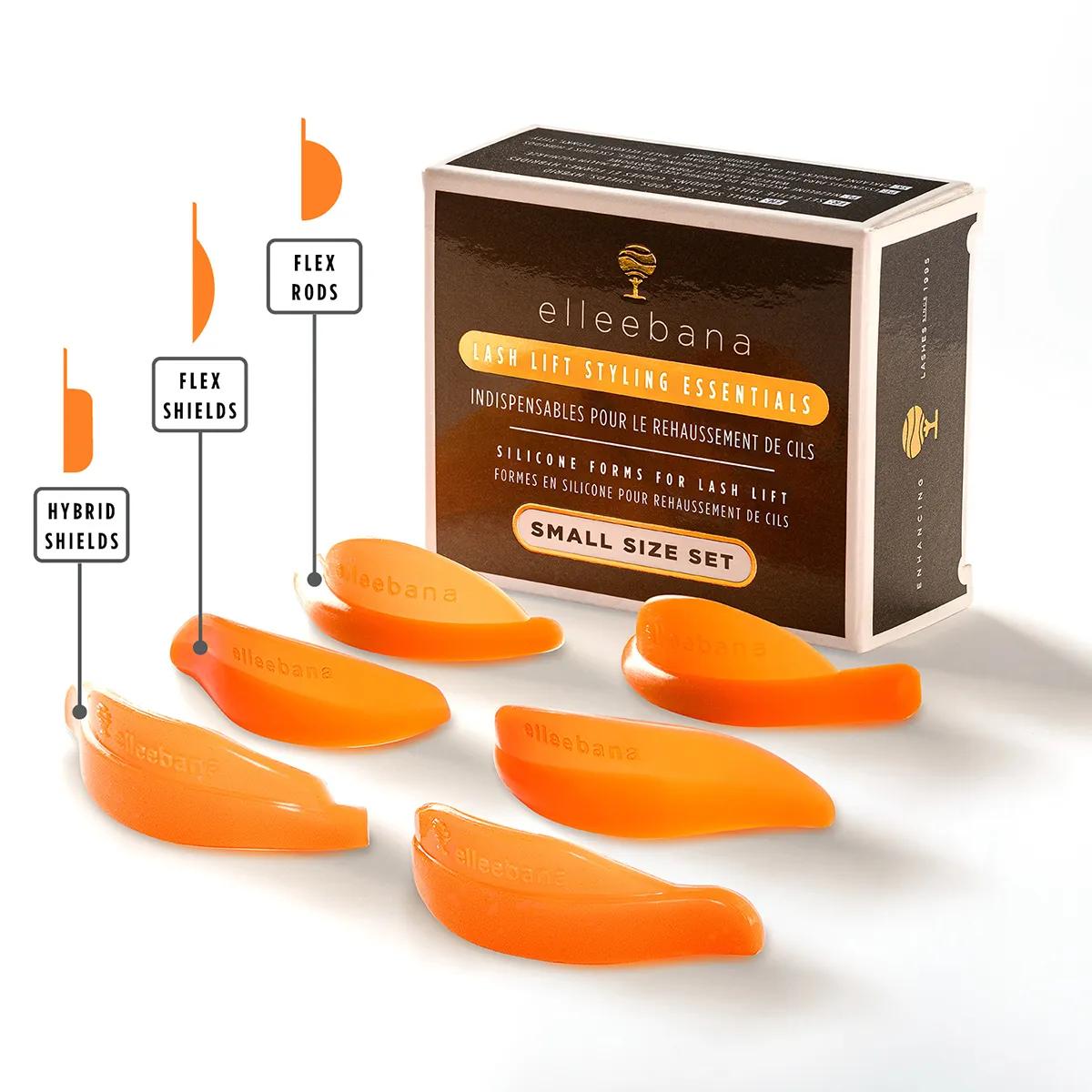
Salon conversations often describe rods as rounded and shields as flatter or more upright. That can be a helpful starting description, but it is not a reliable universal specification. Manufacturers create different curves, apex positions, bases, lengths, materials and size systems. A product called a hybrid shield may deliberately combine characteristics. Two items carrying the same size letter can be visibly different.
The professional decision is therefore product-specific. The therapist must understand how the exact form sits, how the natural lashes travel across it, which system it is designed to support and what the manufacturer’s education requires. An online comparison cannot replace that training or provide a client-specific selection.
This guide compares operational factors without prescribing a treatment technique or processing time. All named products were visible in the live National Salon Supplies catalogue on 23 September 2026. Inclusion is not a ranking, compatibility claim or stock guarantee.
A practical head-to-head framework
| Decision factor | Shield family | Rod family |
|---|---|---|
| Profile | Often flatter, angled or built around a defined apex, depending on design | Often more continuously rounded, depending on design |
| Result language | May be marketed toward lift, curl or hybrid effects | May be marketed toward rounded curl effects |
| Sizing | Unique to the exact family; letters do not translate reliably | Unique to the exact family; letters do not translate reliably |
| Selection | Assess fit, lash path and trained styling objective | Assess fit, lash path and trained styling objective |
| Technique | Use the placement and processing map taught for that system | Use the placement and processing map taught for that system |
| Best use | No universal client or result claim | No universal client or result claim |
Compare profile, not just category
Place the forms side by side off the client and look at the base, rise, apex, front edge and overall curvature. The profile influences how lashes can be arranged within the taught method. It does not guarantee a named result. Natural lash length, direction, density and condition, eyelid anatomy, placement and processing all contribute.
A flat-labelled shield is not automatically dramatic. A rod is not automatically gentle or natural. Those shortcuts ignore the exact design and the therapist’s work. Use current brand education to understand the intended styling logic, then apply professional assessment for the individual client.
Size labels are not measurements
Small, medium and large are convenient inventory labels, not an industry-wide standard. One family’s medium may resemble another family’s small in length, depth or curvature. Even within a family, newer generations can change shape. Keep sets together and avoid combining unidentified pieces.
Selection must consider more than natural lash length. Fit across the eyelid, how the base sits, where the lashes travel, the intended styling direction and the product-specific mapping all matter. A form should not be chosen by copying a social-media result without knowing the system and client assessment behind it.
Record the exact brand, family and size used in the service notes. “Medium shield” is not enough for a repeatable next appointment.
Fit and stability come before the promised look
A form that does not sit as required by the trained system can undermine control. Assess fit before processing products are opened. Do not force an unsuitable form into position or trim, modify or combine it unless the manufacturer’s current education supports that action.
The chosen adhesive or styling method also belongs to the complete system. Some forms or methods may behave differently with particular positioning products. Similar silicone appearance does not prove interchangeability. When adding a new shield or rod family, trial it through education and supervised practice rather than during a fully booked client day.
Natural lash presentation and styling objective
Consultation should translate a client’s words—lifted, curled, open, soft or noticeable—into a realistic discussion of the trained options. Avoid guaranteeing an image-perfect outcome. Natural lashes differ in length, growth direction, density and condition, and the same form does not create an identical result on every person.
Inspect the eye area within professional scope and follow the system’s contraindication and patch-testing directions. If the presentation falls outside training or treatment should not proceed, defer and refer rather than using a different rod or shield to work around the issue.
Processing maps remain system-specific
Changing the form can change the geometry of the service. That does not authorise the therapist to move product placement or processing zones by guesswork. Follow current education for the exact solution and styling form combination. Never carry timings, placement rules or quantities from one system into another simply because the shapes look similar.
Keep the manufacturer directions accessible at the station. Update the salon protocol when a new family is introduced and observe competency before unsupervised use. The protocol should name the solution system, form family, positioning product, tools and recordkeeping expectations.
Hybrid shields are a third decision, not a shortcut
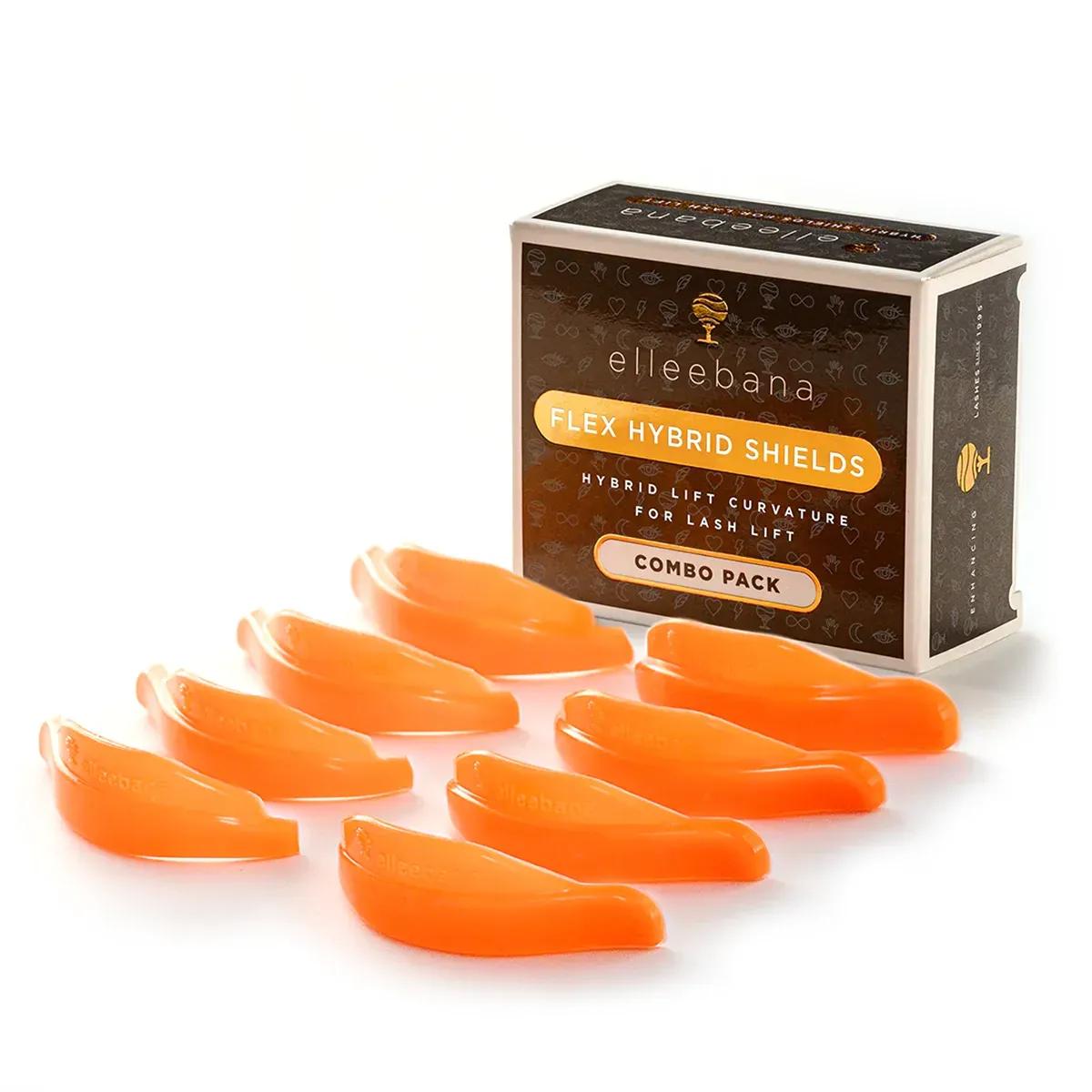
Hybrid products can combine design characteristics that do not fit a simple shield-versus-rod binary. Treat them as their own family. Study the exact profile, sizes and education instead of assuming they deliver the “best of both”. Marketing language describes intent, not a universal result.
A salon may find that one carefully chosen family covers most appointments, while a second solves a defined styling or fit need. More sets are not automatically more professional. Every family adds training, cleaning, storage, identification and stock-control work.
Material, condition and reprocessing
Follow the manufacturer’s directions on whether the exact product is reusable and how it should be cared for. For reusable forms, the salon needs a suitable cleaning and reprocessing process, inspection, drying and protected storage. A quick wipe or visual check alone may not be sufficient.
Inspect for tears, distortion, tackiness, staining or surface changes. Retire an item when it no longer meets its directions or serviceability standard. Do not mix clean and used items in the same tray, and keep pairs or sets identifiable after processing.
How to trial a new shield or rod family
- Confirm the family is supported for the salon’s chosen lash-lift system.
- Complete or refresh product-specific education before client use.
- Inspect every size and document the physical differences.
- Practise selection, fit and lash arrangement under appropriate supervision.
- Use the exact manufacturer directions rather than the old family’s routine.
- Record brand, family, size and relevant factual observations.
- Review several ordinary services before changing the salon standard.
Do not turn a small internal trial into a claim that one style is safer, lasts longer or suits every client. The useful outcome is a repeatable selection framework for your trained team.
Commercial and stock considerations
Reusable styling forms may have a low per-service product cost, but the complete commercial picture includes training, cleaning, inspection, replacement and the time required to manage multiple families. Count complete pairs and sizes weekly. A set with a missing left or right piece may not provide the service capacity its box suggests.
Buy a broad range only when the appointment mix and trained method justify it. Keep a core family easy to identify, then add a hybrid or alternative profile for a documented need. Record the exact reorder code so a similarly named generation is not purchased accidentally.
Build a selection worksheet for the team
A useful worksheet does not tell therapists to use one size for every lash length. It prompts the trained assessment. Include the exact form family, available sizes, observed fit, natural lash presentation, styling objective, positioning product, solution system and the reason for the final choice. Keep the wording factual and within professional scope.
Photographs should be handled only with appropriate client consent and privacy controls. They can support internal learning, but one image is not proof that a form will behave the same way for another person. Pair any image with the exact products and service notes so it is not separated from its context.
Review the worksheet during team calibration. If therapists interpret a size label differently, return to the manufacturer education and the physical profile. The goal is consistent reasoning, not forcing every therapist to select the same form regardless of assessment.
Common shield and rod selection mistakes
- Choosing from the desired social-media look without assessing the natural lashes or fit.
- Assuming small, medium and large mean the same thing across brands.
- Using a new profile with the old family’s placement map or processing routine.
- Selecting the smallest form because it is expected to create the strongest result.
- Forcing a form to sit when its shape does not fit as required by the trained method.
- Mixing loose pieces from different families after cleaning.
- Keeping damaged, distorted or unidentified forms in active stock.
- Buying every new shape without a documented service need or staff education.
- Promising a result from the form alone while ignoring other service variables.
Most of these errors come from turning a professional system into a simple size chart. Slow the decision down before the processing products are opened. An extra minute spent confirming the form and protocol is more useful than trying to correct a poor setup later.
Troubleshoot the system, not only the silicone form
If placement or lash arrangement is inconsistent, check the complete setup: product identification, form condition, chosen size, approved positioning product, preparation, tools, room setup and therapist training. Replacing a rod with a shield may hide the real cause rather than solve it.
When results vary between therapists, compare their recorded choices and observed workflow under suitable supervision. Do not immediately conclude that one person needs a smaller size or a different brand. Calibration may reveal that staff are using different definitions, arranging lashes differently or following outdated education.
If an unexpected client response occurs, stop and follow the salon’s established response and documentation process. A general guide cannot diagnose the cause, and changing form families is not a clinical remedy.
Introduce a new family without disrupting bookings
Start with a documented reason: a recurring fit challenge, a styling option supported by the chosen system or the need to replace a discontinued family. Compare the live pack contents and sizes, obtain the current education and nominate a lead therapist to manage the trial.
Keep old and new families separately labelled. Do not rely on colour alone, because colours may change between batches or product generations. Update the station map, cleaning process, service-record options and reorder sheet before the first unsupervised use.
Review the trial after several ordinary services. Ask whether the family solves the defined problem, whether staff can select it consistently, whether it adds meaningful complexity and whether replenishment is reliable. If it merely duplicates the core set, removing it may create a stronger system than keeping more choice.
Client communication without overpromising
Clients do not need a technical lecture on every form, but they deserve an honest explanation of the styling plan and its limits. Describe the intended direction in plain language, confirm consent and avoid guarantees about curl, symmetry, longevity or suitability. Natural lashes and individual response vary.
After the service, record the exact family and size rather than telling the client that one named shield is now “their” permanent option. Reassess at later appointments because natural lashes, preferences and product systems can change.
Current products Australian salons can investigate
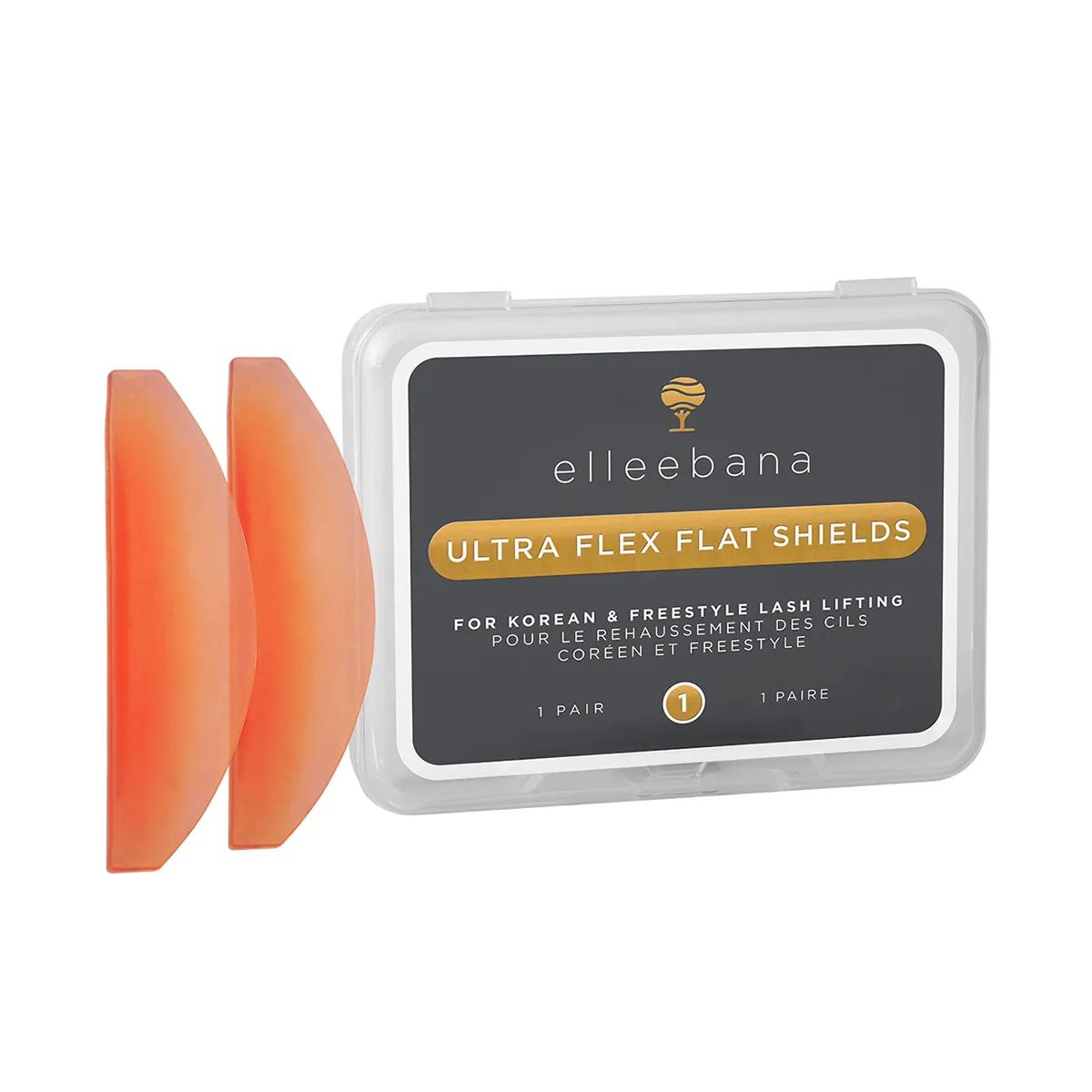
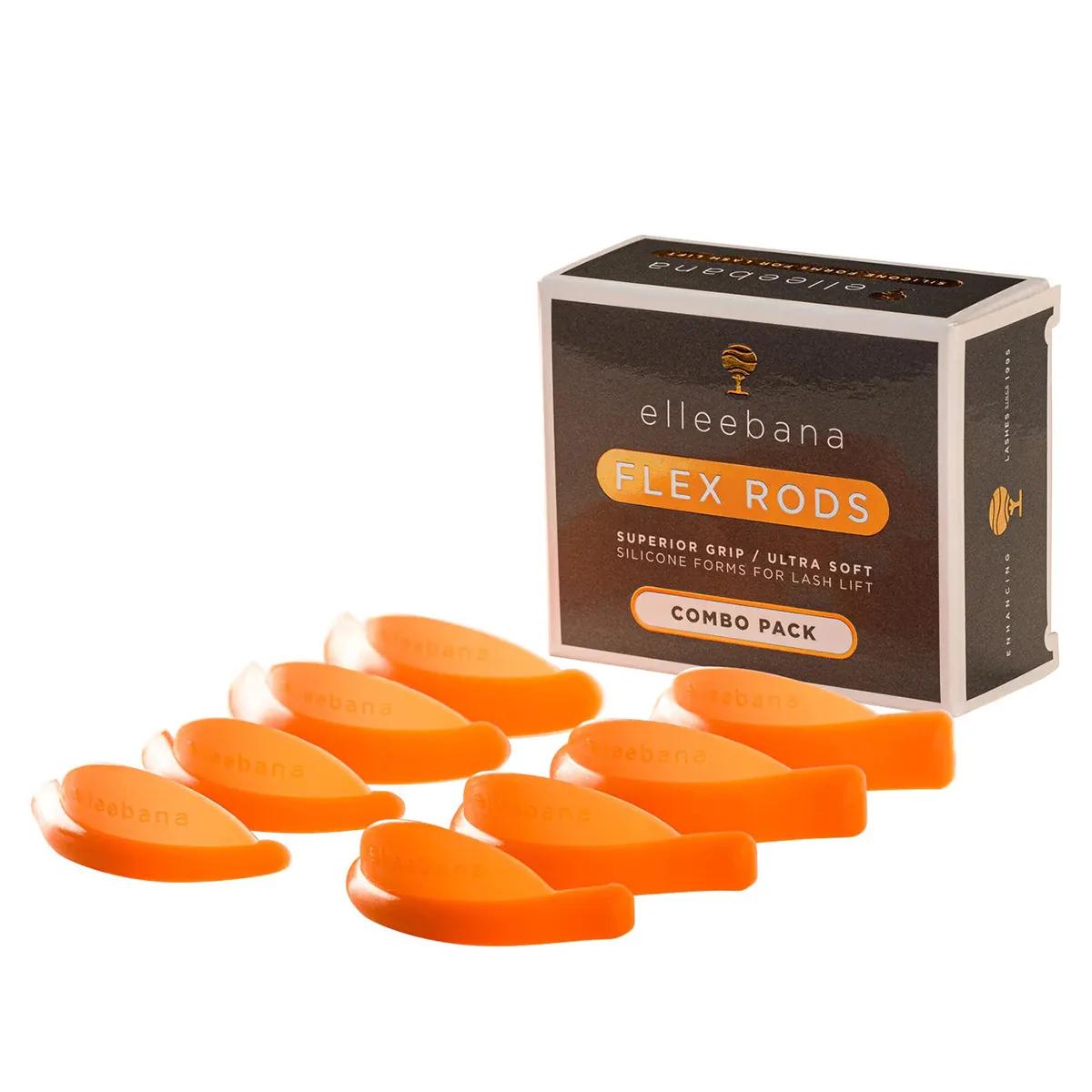
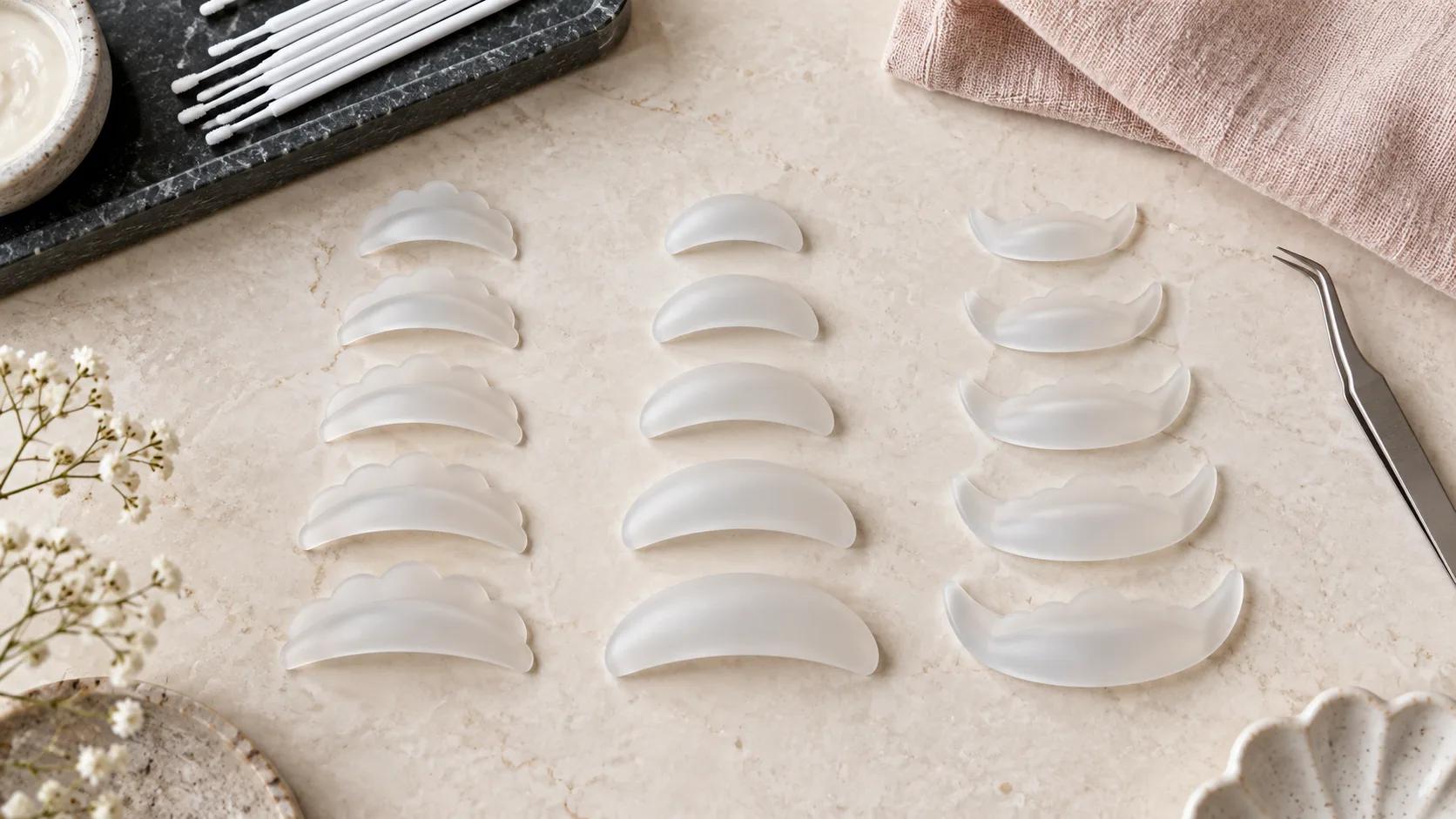
These current catalogue examples show flat, standard shield, hybrid, rod and mixed styling-set options. Read each live product page and the supporting manufacturer education before purchasing or treating.

Final recommendation
Do not declare shields or rods the universal winner. Compare exact profiles, learn the manufacturer’s intended method and select for the individual assessment and styling objective. Start with one well-understood family, keep sizes complete and recorded, and add a second profile only when it fills a genuine need.
The strongest salon system makes selection teachable. Staff should be able to explain why a particular family and size was chosen without relying on vague labels such as dramatic, natural or best.
Compare current professional styling forms
Review live shields, rods, hybrid profiles and pack contents on National Salon Supplies.
Browse lash lift shields & rodsFrequently asked questions
What is the difference between lash lift shields and rods?
The practical difference is their profile and the styling path they create within a particular professional system. Names and shapes vary between manufacturers, so therapists should learn the exact product family rather than applying a universal rule.
Are lash lift shields better than rods?
Neither is universally better. The appropriate choice depends on the exact product, natural lash presentation, intended styling direction, eye-area assessment, system directions and therapist competency.
Can lash lift rods and shields be reused?
Follow the current manufacturer directions for the exact item. If an item is designed for reuse, the salon still needs an appropriate cleaning, reprocessing, inspection and protected-storage process.
How does a therapist choose the right size?
Use product-specific training and directions, considering the individual lash length and presentation, eyelid fit, intended result and placement. Size labels are not standardised across brands.
Can rods or shields be mixed with another lash-lift brand?
Do not assume compatibility. Confirm the combination through current manufacturer information and training before changing any part of the approved system.